

Chuncheng Guo and his colleagues set out to test a question at the centre of climate research: whether a weakened Atlantic Ocean current could regain its strength if global warming were reversed. Their modelling found that it could, challenging earlier studies that had suggested the system might pass an irreversible tipping point.
The Atlantic Meridional Overturning Circulation, or AMOC, carries warm water and nutrients from the tropics towards the Arctic Circle and helps keep Europe’s winters mild. Climate change has already caused a roughly 15 percent decrease in the system.
The Danish Meteorological Institute study, published in Science Advances on Wednesday, 14 October 2026, found that an Atlantic current system weakened by warming could recover over time as the climate cooled.
Guo’s team used a state-of-the-art climate model to track the AMOC as temperatures rose in response to carbon emissions. The simulation included both higher air temperatures and melting from the Greenland ice sheet.
Advertisement
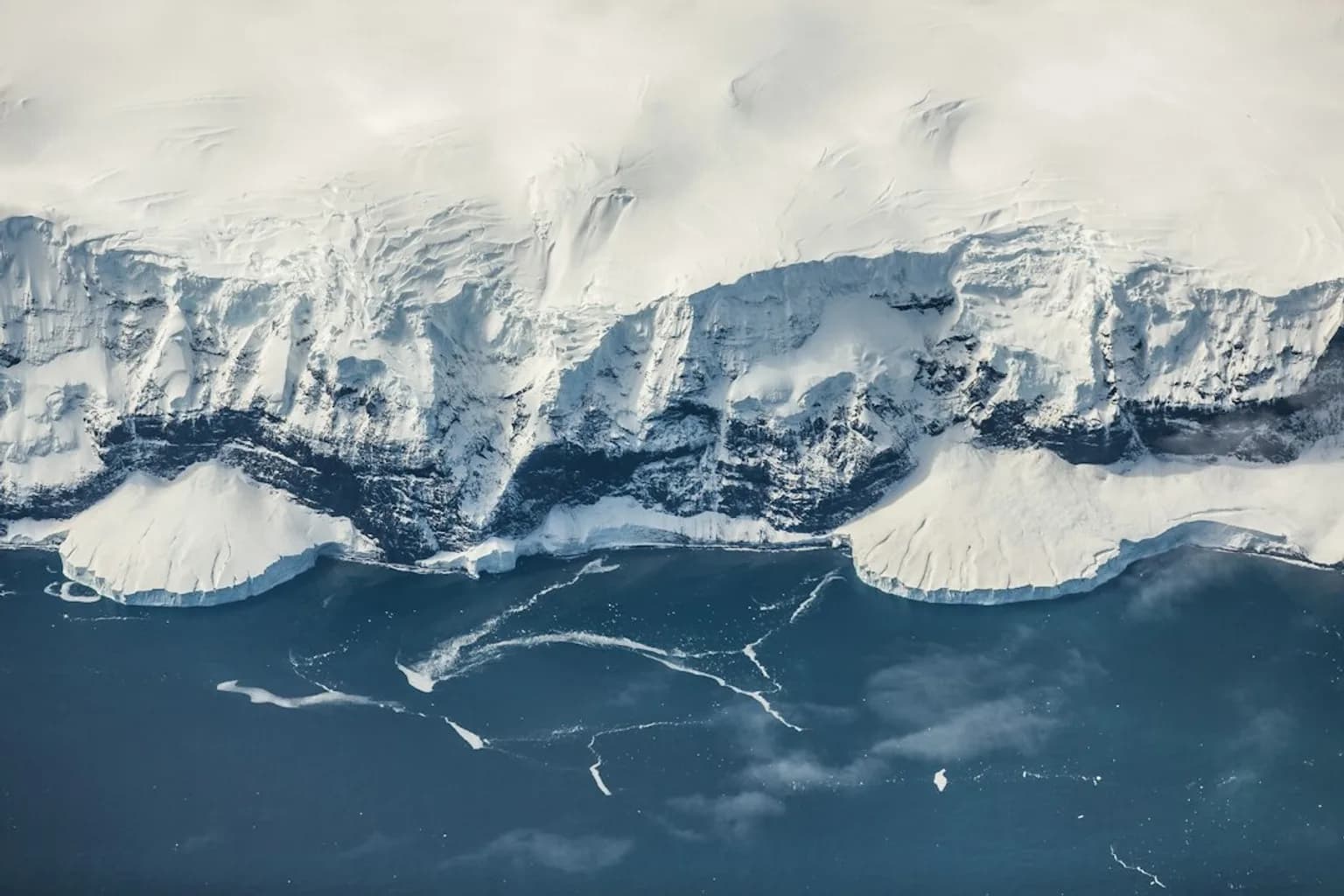
The ice sheet sends cold freshwater into the ocean, weakening the AMOC. Its effects can persist for centuries, and the ice sheet itself could not be restored if it melted, even if the warming trend later reversed.
In the model, the AMOC response followed global mean temperature in a very linear way. The researchers found no sign of the irreversible tipping point proposed in some previous studies.
“In our model, we do not see a tipping point leading to a collapse. The AMOC gradually weakens, but we find that it also immediately regains its strength if global warming is reversed,” Guo said.
The result does not mean warming would leave the current unharmed. At around 7 degrees Celsius of global warming, the AMOC could slow from around 17 million cubic metres of water per second to about 6 million. Guo said it would not be totally extinguished even with up to 10°C of warming.
If the world reached net zero emissions, then cooled the climate by removing huge amounts of carbon from the atmosphere and placing it in long-term storage, the AMOC would begin to strengthen within decades. Full recovery could still take several centuries, even though the process would start once temperatures fell.
That scenario faces a practical constraint. Guo cautioned that the cooling rate needed to reverse the AMOC exceeds what current technology is considered able to achieve. “Instead of relying on the global cooling to happen, it's a much, much safer strategy to not have warming in the first place,” he said.
The stakes of severe disruption are broad. A collapse of the AMOC would bring ‘ice age’ winters to Europe, raise sea levels in North America and disrupt vital monsoons in Africa and Asia. A disrupted system could also destabilise global rainfall patterns and accelerate coastal sea-level rise.
The UN’s environmental body said in September that global temperature rises are set to exceed the key threshold of 1.5 degrees Celsius “within a few years”. Researchers have estimated long-term sea-level rise of around 20 cm from Greenland ice-sheet melting after a 1.5 degrees Celsius rise.
Willem Huiskamp of the Potsdam Institute for Climate Impact Research, who was not involved in the study, said a more stable AMOC would be good news. He questioned whether the real-world current would prove as stable as some models suggest.
Advertisement



Comments (0)