
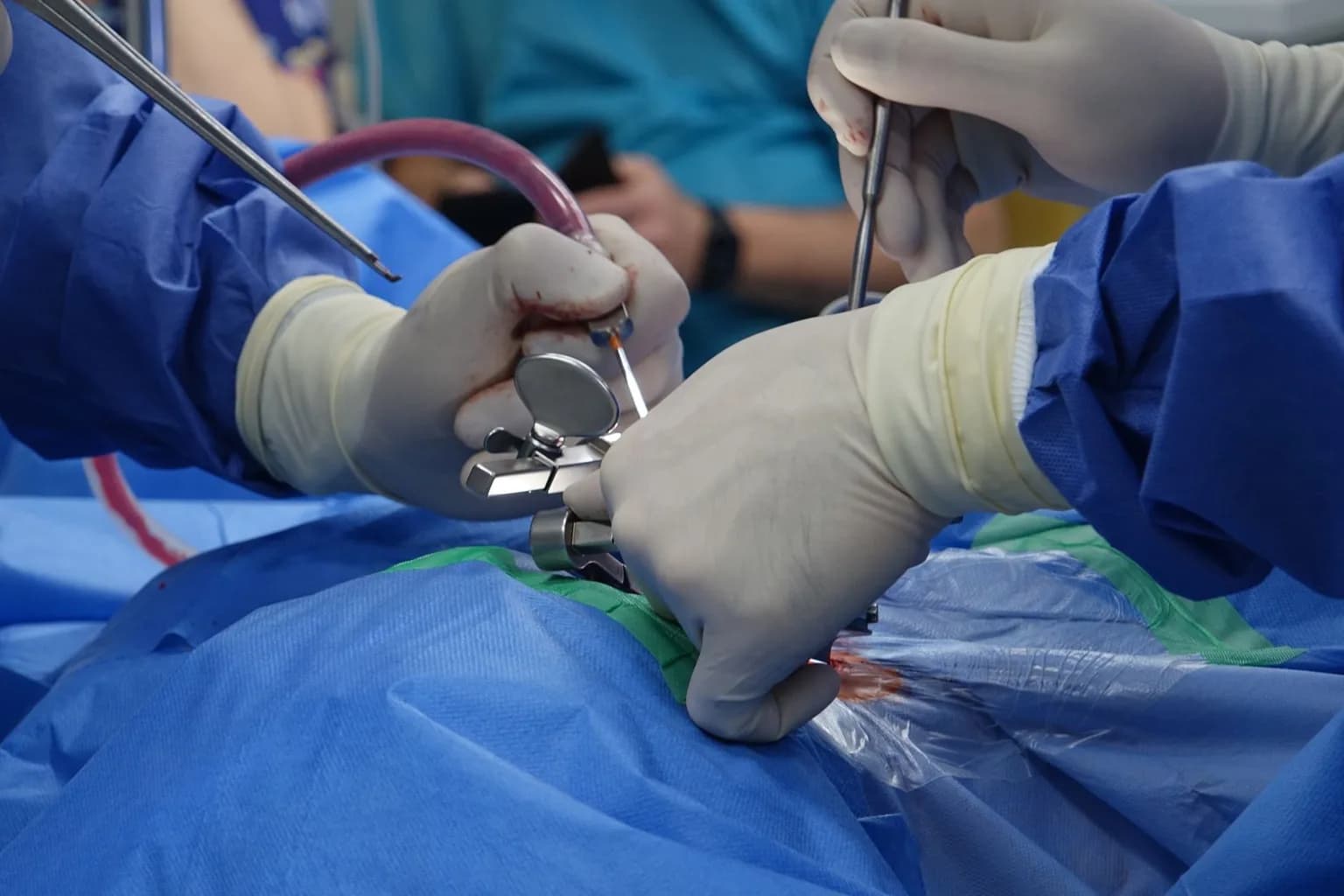
Dr. Sameer Sheth led a team that placed Neuropixels probes in the hippocampus of epilepsy surgery patients under general anesthesia, listening in on electrical signals from hundreds of individual neurons. Sheth, a professor and Cullen Foundation Endowed chair of neurosurgery at Baylor, is also a neurosurgeon at Baylor St. Luke's Medical Center.
In the operating room, the researchers first played repeating tones, with an occasional different sound breaking the pattern. The experiment began from the conventional assumption that general anesthesia leaves the brain cognitively inert, with consciousness switched off and neural processing halted.
The hippocampal neurons responded differently when the unexpected sounds arrived, despite the patients being under anesthesia. As the experiment continued, the cells became progressively better at telling the unusual tones apart, a result the researchers describe as learning and adaptation during unconsciousness.
The team then played short stories while recording activity in the same brain region. Dr. Benjamin Hayden, a Baylor professor of neurosurgery, collaborated on the work examining language processing under anesthesia.
Advertisement
Different neural activity patterns held information about grammatical categories including nouns, verbs and adjectives. Activity in the hippocampus also carried information that could be used to predict words coming next in a sentence.
The hippocampus sits in the temporal lobe and is involved in learning and memory. Taken together, the experiments indicate that it can process acoustic and semantic features of speech during this form of anesthesia, while the brain's predictive coding machinery appears to keep running even when subjective awareness is suppressed.
“Our findings show that the brain is far more active and capable during unconsciousness than previously thought,” Sheth stated.
The findings, published in Nature on 15 October 2026, challenge the view that loss of conscious awareness brings cognitive processing to a halt. They point instead to a distinction between activity within an individual region such as the hippocampus and the coordination between brain regions that may be required for consciousness.
There are limits to what the study can establish. Its data came from a small cohort of epilepsy surgery patients, and its conclusions apply to a specific type of general anesthesia. They cannot automatically be extended to other anesthetic methods, sleep or coma.
It remains unknown whether similar language processing occurs elsewhere in the brain during anesthesia, whether it affects recovery or memory formation, or which cognitive functions persist when awareness does not. The research could nevertheless help develop brain-computer interfaces and speech prostheses for people who have lost the ability to speak because of neurological injuries.
Advertisement





Comments (0)