
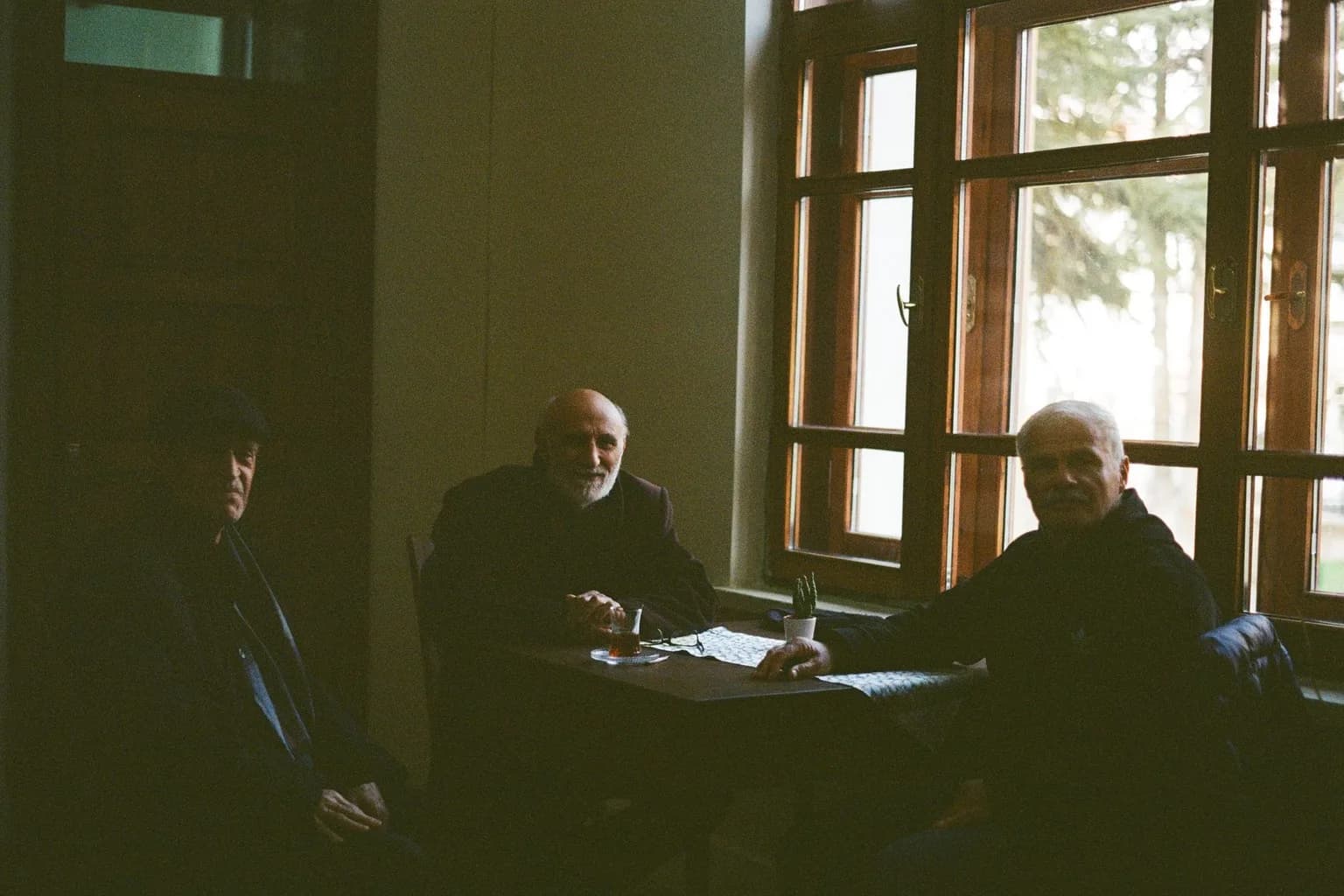
Jairo Sinova, Libor Šmejkal and Tomas Jungwirth received the 2026 Europhysics Prize on 22 September 2026 at the European Physical Society Condensed Matter Division conference in Graz, Austria. The award recognised their work establishing altermagnetism as a third category of collinear magnetism.
“This award recognizes a fundamental discovery that challenged one of the most established paradigms in condensed matter physics,” Sinova said.
For more than 100 years, physicists generally placed collinear magnets in two fundamental groups: ferromagnets and antiferromagnets. Altermagnetism, which had remained hidden for more than 100 years, changed that framework.
Like antiferromagnets, altermagnets have magnetic moments that cancel one another, leaving no net magnetization. Their electrons can nevertheless show properties previously associated with ferromagnets.
Advertisement
That combination gives altermagnets the capacity to carry electrical currents with strongly polarized electron spins while also displaying extremely rapid magnetic dynamics.
The work grew from a collaboration between Sinova’s research group at Johannes Gutenberg University Mainz and Jungwirth’s team at the Institute of Physics of the Czech Academy of Sciences in Prague. Sinova is a professor at Johannes Gutenberg University Mainz and director of the Spin Phenomena Interdisciplinary Center, while Jungwirth is a professor at the Prague institute.
Šmejkal spent eight years at Mainz between 2016 and 2024, first as a doctoral researcher and then as a postdoctoral scientist in Sinova’s group. He played a leading role in building the theoretical framework, bringing mathematical approaches to symmetry together with spintronics.
In 2019, the three researchers published findings that identified an overlooked class of magnetic states: states with zero total magnetization and unconventional ferromagnetic properties.
They followed in 2021 with a systematic classification of magnetic phases of matter that revealed altermagnetism and led to the identification of hundreds of potential materials.
In 2022, the team published a comprehensive symmetry classification of altermagnetism and identified hundreds of materials that could potentially show it.
The predictions quickly prompted experimental work around the world. Researchers used angle-resolved photoemission spectroscopy, known as ARPES, and electrical transport measurements to confirm them.
Teams in Europe, North America and Asia joined the field, and hundreds of scientific papers on altermagnetism appeared within just a few years.
The European Physical Society Condensed Matter Division selected the three physicists for the prize. It was the first time Czech scientists had received the significant award.
On 15 October 2026, Jungwirth presented the work to members of the Scientific Council of the Czech Academy of Sciences in a lecture room in the building on Národní street in Prague.
Advertisement


Comments (0)