
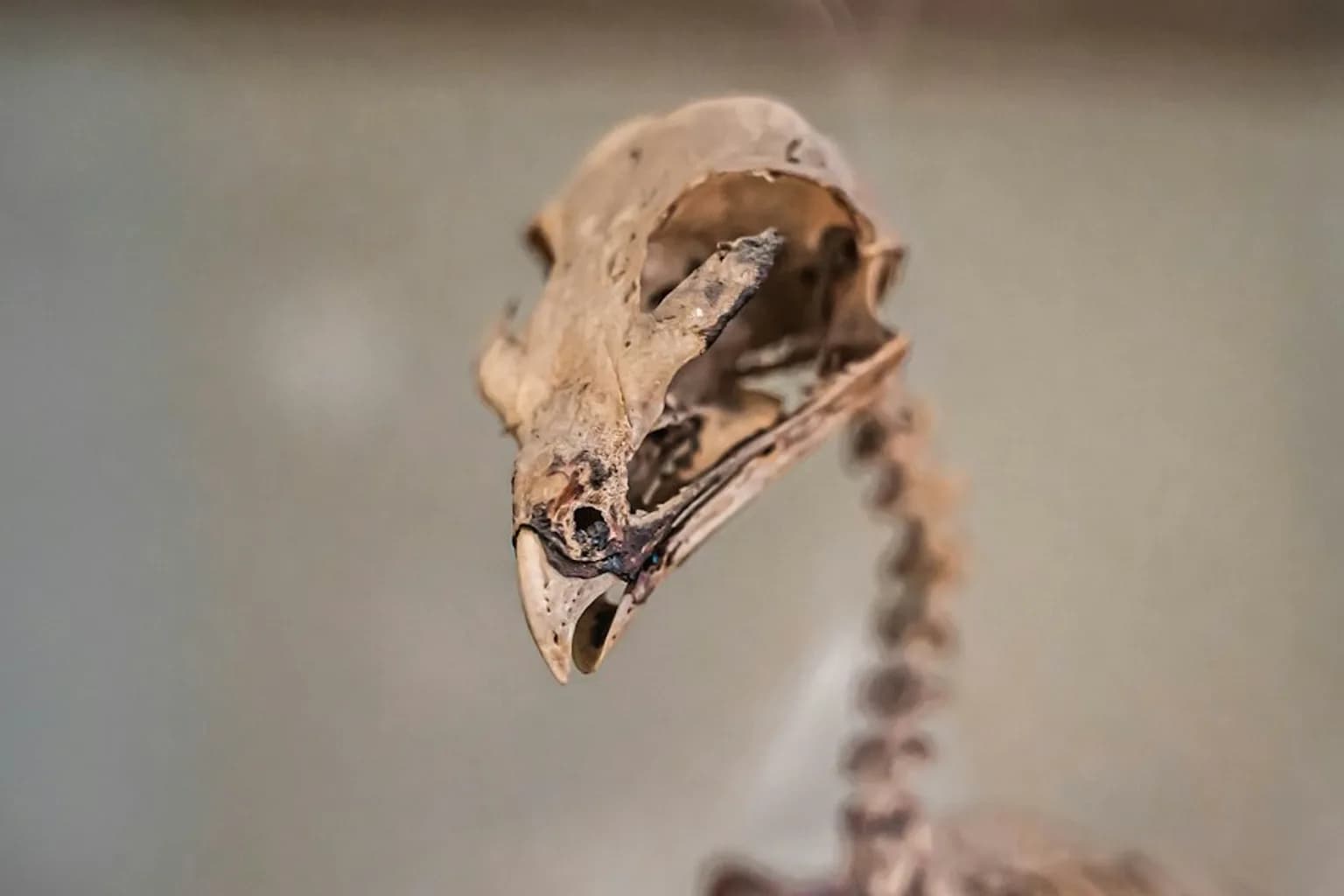
The nearly complete skull had been sitting in museum collections since its discovery in the 1920s, with the tip of its snout gone and its identity mistaken for decades. That damaged fossil has now been identified as a previously unknown crocodilian species, Herugavialis cairensis.
The specimen came from Egypt's Mokattam Formation, a 45-million-year-old deposit that preserves a shallow tropical sea which once covered what is now northern Egypt. Herugavialis inhabited that sea. The formation is the same limestone layer quarried to build the Great Sphinx and the Giza pyramids.
Paul Burke, a researcher at the Swedish Museum of Natural History and the study's first author, led the international research effort with Philip Mannion, a University College London paleontologist and study co-leader. Their study was published in Royal Society Open Science.
When the skull was uncovered in the 1920s, it was classified as belonging to Tomistoma, the genus that includes the modern false gharial of Southeast Asia. The researchers then used computed tomography scans to study its internal anatomy and compared more than 300 features with living and extinct crocodilians.
Advertisement
Those comparisons found differences sufficient to establish the animal as a distinct species previously unknown to science. Its genus name combines 'Heru,' another name for the ancient Egyptian god Horus, with a term referring to gharials. The species name cairensis refers to Cairo.
Gharials are crocodilians with long, narrow snouts. Herugavialis lived alongside at least two other gharial species in Egypt's shallow marine environments at the time. The tip of the skull's snout is missing.
The Mokattam limestone holds fossils of fish, sharks and early whales as well as crocodilians. All crocodiles disappeared from the region around six million years ago. Gharials once ranged across almost the entire world for a period of more than 100 million years. Only two gharial species survive today: the critically endangered Indian gharial and the endangered false gharial, found in parts of South and Southeast Asia.
Advertisement




Comments (0)