
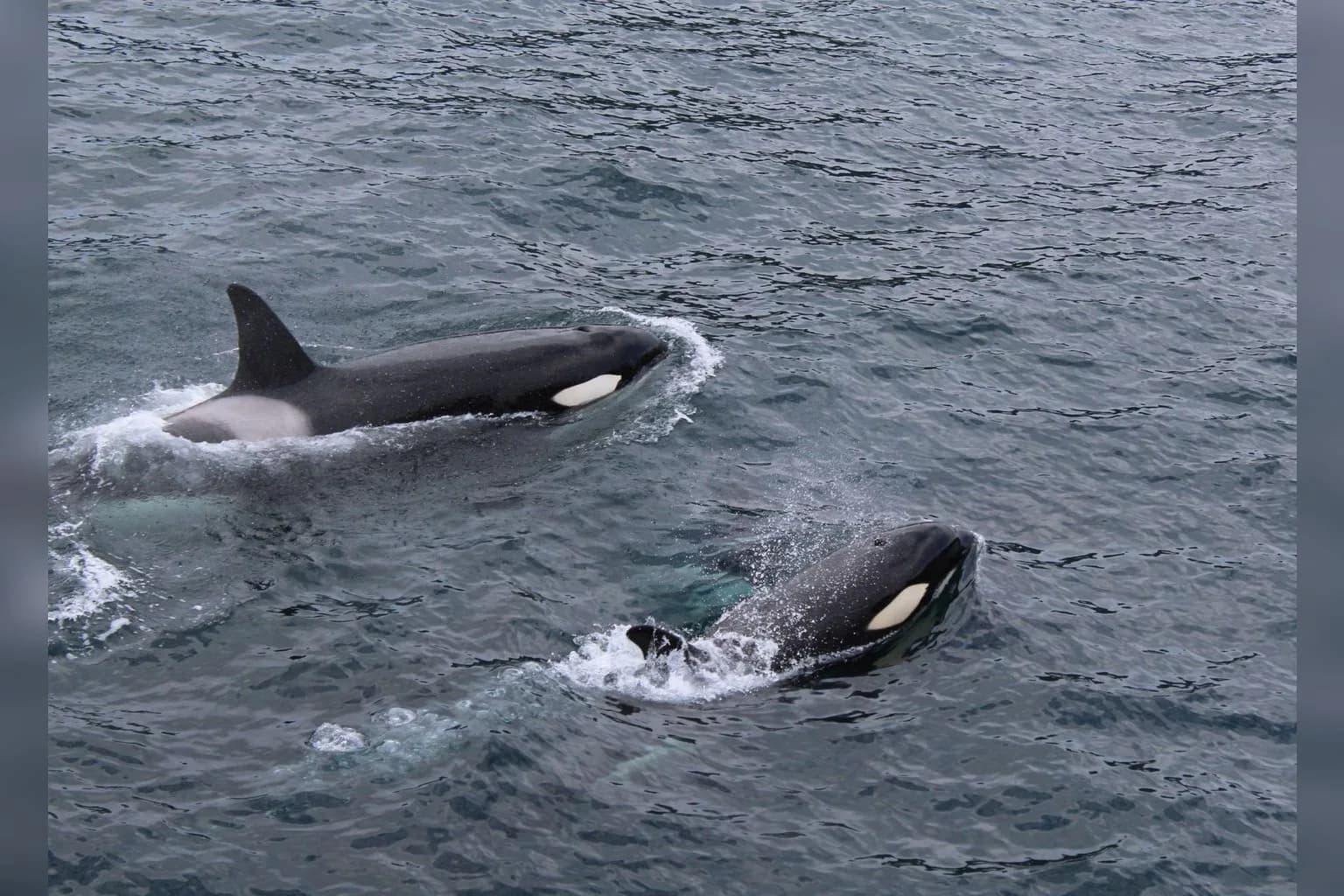
Kathryn Ayres was filming off the coast of San Jose del Cabo on July 29, 2024, when she recorded an adult female orca holding a dead sharp-tail sunfish steady in her mouth as an adult male accelerated towards it.
The male struck the fish with enough force to break its bony body apart explosively. Pieces drifted through the water.
Ayres, a study coauthor, captured the episode with a GoPro. It was one of only two known observations of this coordinated behaviour.
Researchers observed the same broad technique on two separate occasions in the Gulf of California, in 2024 and 2025. In each case, one adult orca held a dead sharp-tail sunfish in place while another rammed it hard enough to smash it into fragments.
Advertisement
After one of the incidents, a young orca fed on the small pieces of the broken fish.
Sharp-tail sunfish can grow to a few meters (10 feet) long.
The research team assessed the ramming as something other than a means of killing prey because the sunfish was already dead. The coordinated action appeared intended to cut up the carcass into manageable pieces.
That has led researchers to suspect they may have documented an unknown way of preparing food for young orcas. Yet the behaviour's exact purpose remains unclear.
One explanation is that the animals are dividing food for the pod. Another is that they are bored.
Francesca Pancaldi, a marine biologist at the marine science center in La Paz associated with Mexico's National Polytechnic Institute, considers feeding young orcas the likeliest explanation. She said a single activity for highly social killer whales can provide food, strengthen bonds and give young animals a chance to learn hunting.
Marianne Nyegaard, a marine biologist at Auckland Museum in New Zealand, did not take part in the work.
The findings were published in Frontiers in Ethology in July 2026 and shared on July 23. Researchers plan to watch for further events in an effort to understand the behaviour more fully.
Advertisement



Comments (0)