
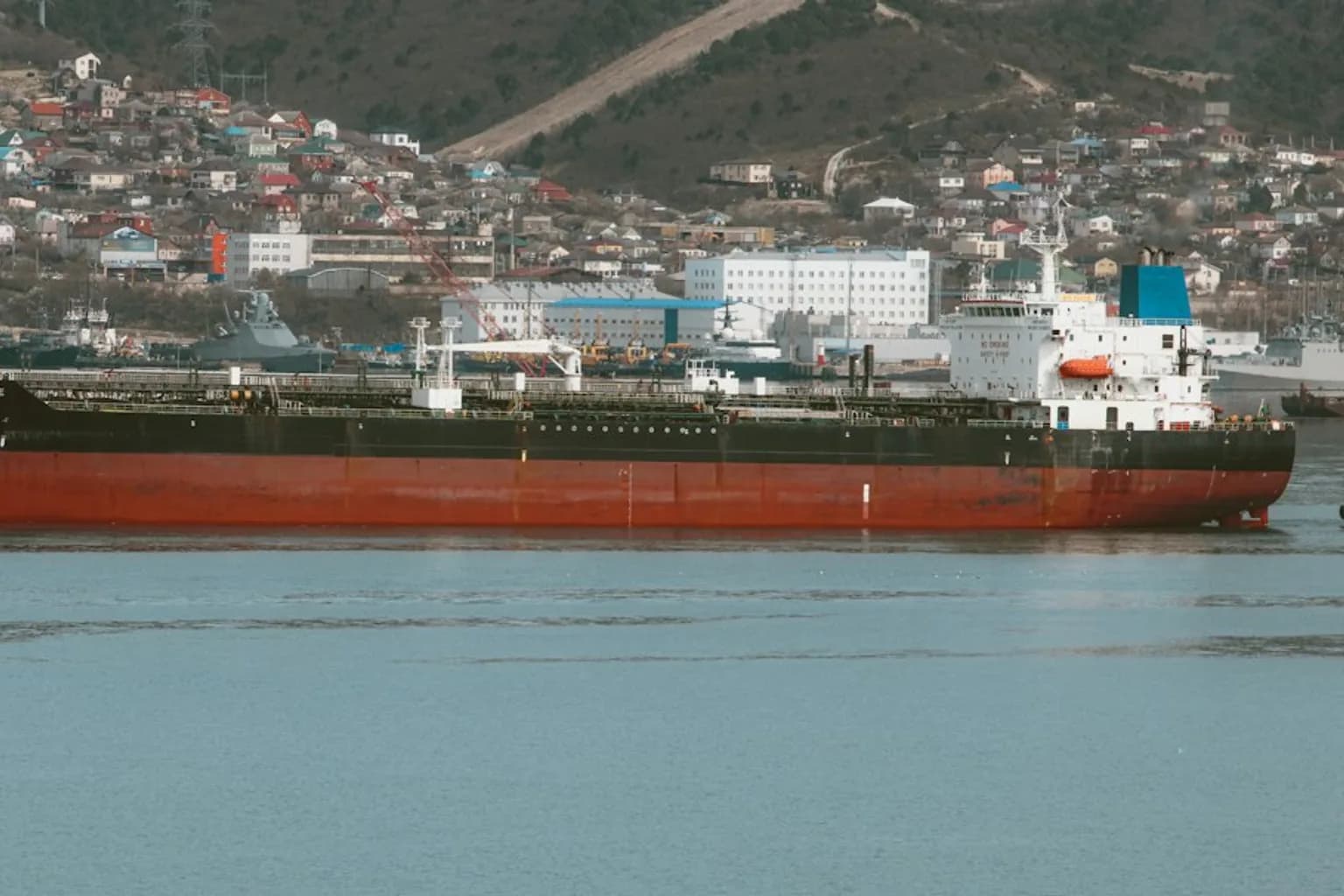
The Dakar, a 22-year-old product tanker travelling on Russia’s Northern Sea Route, was among the vessels Britain added to its sanctions list. The designation came as it made a late-season voyage along the route.
Britain announced 38 new sanctions on 8 October 2026, aimed at Russian oil companies, shadow-fleet tankers and financial networks used to circumvent Western restrictions. The package was intended to restrict revenue and resources supporting Russia’s war effort.
The targets included the oil companies Zarubezhneft and INK Capital, alongside 12 further shadow-fleet tankers. The additions took the number of sanctioned shadow-fleet oil tankers to over 600.
Britain has sanctioned over 600 such tankers and built a regime covering over 90% of Russia’s oil production capacity since Russia’s full-scale invasion of Ukraine. The British government said the latest action put more than 90% of that capacity under UK sanctions.
Advertisement
Shadow-fleet vessels are often more than 20 years old and sail under false flags as part of a network used to transport Russian oil and evade sanctions. Britain said several vessels in its 1 October 2026 package had entered service as recently as July 2026.
The new designations also covered three cryptocurrency exchanges and two payment platforms, several with connections to Kyrgyzstan. Two of the platforms had processed transactions involving the Kremlin-backed A7 financial network, the UK Foreign Office said. A7 claimed to have moved more than $90 billion last year, which Britain said was roughly half of Russia’s annual military spending.
Another 17 individuals and entities were sanctioned over supplies for Russia’s military production, including imports of machine tools, electronics and components used to make ballistic missiles and drones.
With the latest package, Britain became the first G7 country to sanction Russia’s top four oil companies. Lord Wood of Anfield, a British government official, said: ‘We are targeting both the revenues that help sustain Russia’s aggression and perpetrators of horrendous crimes against Ukrainian civilians, including children. The UK will not flinch in our support for Ukraine.’
Eight days later, on 16 October 2026, Donald Trump signed an executive order waiving major new US sanctions and tariffs against Russia that Congress had authorised. The order waived duties and numerous sanctions provisions in the Lindsey O. Graham Sanctioning Russia and Iran Act of 2026, including a 500% additional tariff on goods imported from Russia.
The waiver eliminated duties ranging from 500% on Russian goods to 100% on goods from the five largest importers of Russian oil and natural gas, while preserving certain earlier US sanctions. Trump submitted a certification to Congress saying the waiver was in the national interests of the United States.
The Trump administration had also been considering easing restrictions on sanctioned tankers in an effort to reduce record-high freight rates, Reuters reported.
Kirill Dmitriev, Russia’s presidential investment envoy, welcomed the US waiver. Don Beyer, a Democrat member of Congress, criticised it, arguing that it weakened pressure on Moscow.
The UK measures remain in force regardless of Washington’s waiver. Britain is urging allies to tighten restrictions on shipping services that support Russia’s oil trade. London and Washington appear to be moving in different directions on Russian oil.
Advertisement
Comments (0)