
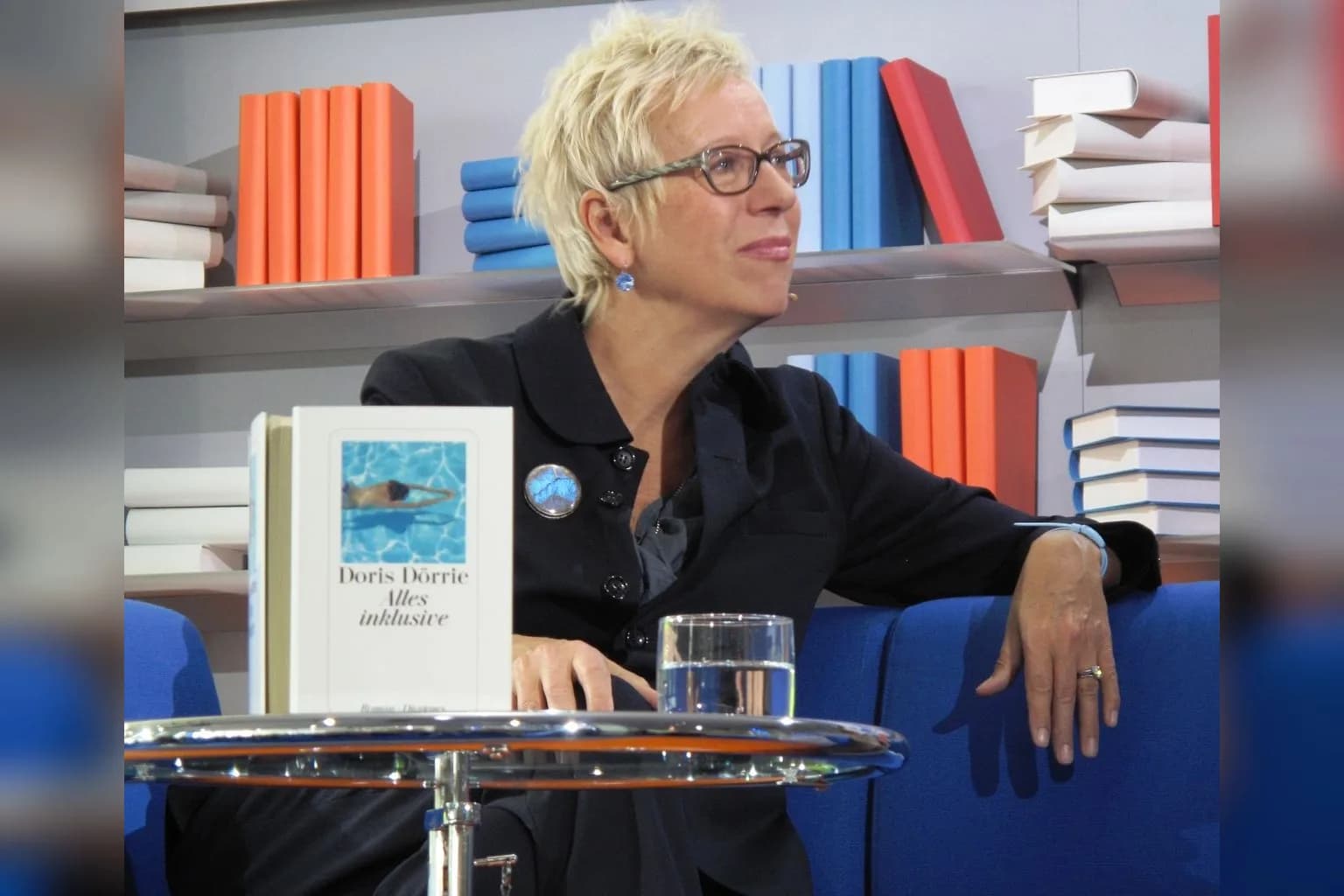
Doris Dörrie, one of Germany’s best-known contemporary film directors, has made a film about the moment when an older person’s private life becomes a question for a family, a machine and, ultimately, medicine. Her new work is titled “Frau Winkler verlässt das Haus” (“Mrs. Winkler Leaves the House”).
Its protagonist, Mrs. Winkler, lives in Hamburg in the near future. After a fall, she can no longer live independently. Her only daughter cannot give her permanent care.
Into that gap comes Pavlovich, a care robot introduced to look after her. The machine has a built-in End of Life (EOL) programme. It can provide assisted dying when a person explicitly wishes to end their life and meets the relevant medical criteria.
The film turns a domestic problem into a larger question about ageing societies, including Germany, Japan and China: who provides care when independence ends, and what role might machines have when a person wants to die?
Advertisement
Dörrie has said: “I write about what personally moves and interests me”. Her current film moves between age drama and science fiction, and is currently in cinemas.
Her breakthrough came in 1985 with the comedy “Men...” (“Männer”), her third feature film. It was a commercial success and has been described as one of the most successful films of German post-war history.
Martin Scorsese sent Dörrie a personal letter congratulating her on the success of “Männer”. Columbia Pictures then offered her a contract for five film projects.
She later gained further international recognition with 2008’s “Cherry Blossoms” (“Kirschblüten – Hanami”), described as a moving melodrama, and directed “Greetings from Fukushima” in 2016.
In “Frau Winkler verlässt das Haus”, the technology is bound to a family’s immediate predicament. Pavlovich offers care where the daughter cannot remain, while its End of Life programme places agency, medical criteria and assisted dying within the same household story.
Advertisement



Comments (0)