
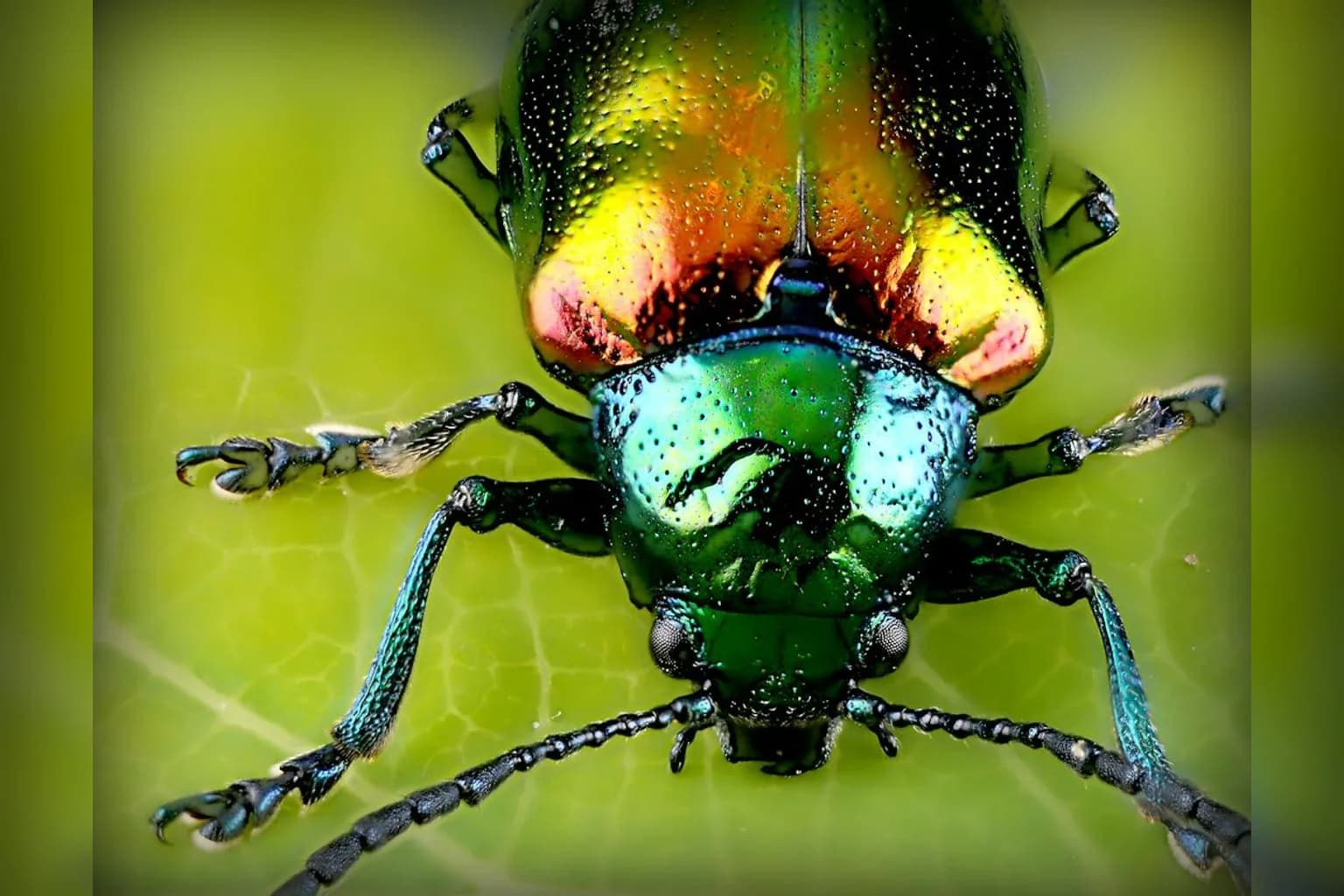
Grey Gustafson spent three years building genomic data on tiger beetles, drawing on fresh specimens from the western US, ethanol-preserved frozen material supplied by colleagues, and insects kept in natural history collections in the US and Europe. The work formed part of a four-year National Science Foundation grant.
Gustafson, an associate professor in the Department of Biological Sciences, was studying two western US groups: Amblycheila, known as giant tiger beetles, and Omus, known as night stalking tiger beetles.
Both had previously been placed in the tribe Manticorini, a group of large-bodied, flightless tiger beetles found in the Southern Hemisphere. That created a longstanding problem: how could flightless beetles have reached North America when most Manticorini species live in Sub-Saharan Africa and the only other close relative is in South America?
To test that assumption, Gustafson compared DNA sequences from across tiger beetle genomes.
Advertisement
The analysis found that North America’s giant tiger beetles are closest to the South American tiger beetle. Those two groups are, in turn, closest to tiger beetles in southern Africa.
The result points to a far older explanation than an ocean crossing. Gustafson found that Manticorini evolved when South America and Africa were part of Gondwana, the ancient supercontinent.
The group is older than the separation of the continents, the research found. Its populations therefore originated before an ocean stood between South America and Africa, rather than crossing one later.
That pattern is called vicariance: a barrier forms and divides populations of the same species on the land to either side. In this case, continental drift split the ancestral beetle populations.
The researchers describe the beetles as a well-supported example of Gondwanan vicariance, in contrast with rheas in South America and ostriches in Africa.
Gustafson and his colleagues published the findings in Proceedings of the Royal Society B.
Advertisement


Comments (0)