
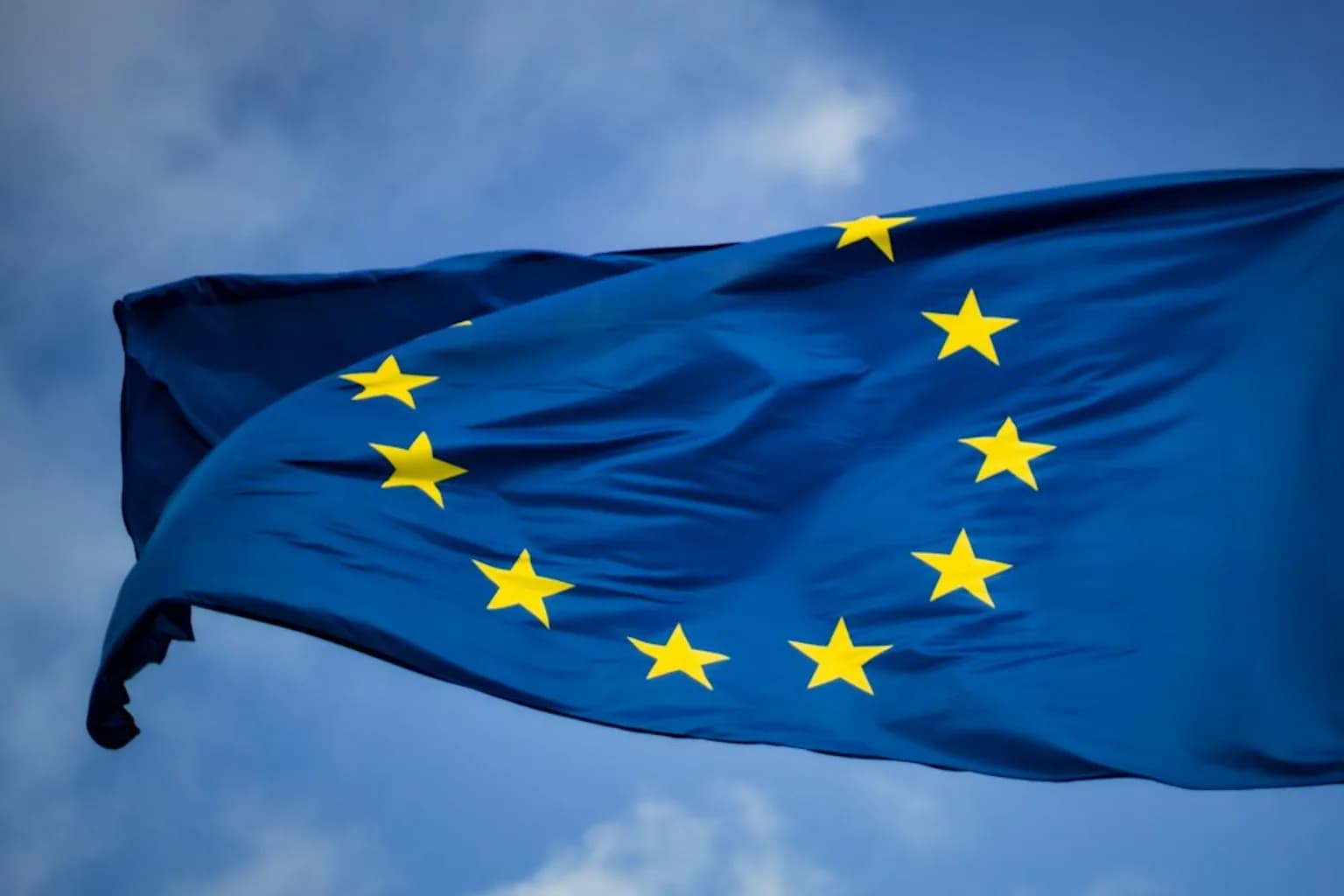
Friedrich Merz arrived in Brussels demanding a smaller European Union budget, warning that “no member state in the EU can afford to pay contributions into the Union on such a level.” The German chancellor also doubted leaders could “reach a conclusion these days, this weekend.”
His intervention set the tone for a two-day summit that began on Thursday, as EU leaders confronted a widening split over the bloc’s 2028–2034 budget.
The European Commission began the negotiations with a proposal intended to finance new priorities in security, defence, competitiveness and climate. Ireland then put forward a compromise of 1.62 trillion euros ($1.81 trillion), cutting 141 billion euros ($158 billion) from the Commission’s opening offer.
For Sweden, the proposed scale is the central problem. Prime Minister Ulf Kristersson said it was “far too big, far too expensive” and would lift Sweden’s net contribution by almost 60%.
Advertisement
Sweden is one of about 10 countries that pay more into the EU budget than they receive in allocations. Germany and other net contributors are pressing for lower spending, while 17 countries known as the Friends of Cohesion are seeking to preserve farm subsidies and funding for poorer regions. Those programmes account for about two thirds of the entire budget.
Piotr Serafin, the EU budget commissioner, warned on Tuesday that “the proposed cuts risk leaving us with less capacity to act together.”
The eventual budget is likely to total between 1% and 1.2% of the gross national income of the 27-nation bloc. Every member country and the European Parliament must endorse it.
Micheál Martin, Ireland’s prime minister, described the search for common ground as “a very difficult balancing exercise.”
António Costa, the European Council president, is trying to secure a compromise by the end of the year. “We need to deliver by the end of this year,” he said, with further negotiations scheduled for late November and mid-December.
The political timetable gives him little room. Elections are scheduled in France, Italy and Poland in 2027 and Spain in November, limiting leaders’ scope to accept terms that could prove difficult at home.
Budget decisions are also being pulled by wider economic and security pressures, including geopolitical uncertainty, persistent inflation and demand for strategic investment.
China was a second source of strain at the summit. The EU’s trade deficit with China reached €360 billion ($400.4 billion) last year and is set to exceed that level this year.
Less than a week before the meeting, the European Commission reached an agreement with Beijing aimed at curbing imports of hybrid cars from China. Merz and French President Emmanuel Macron also called jointly for new EU action against market-distorting practices and unfair economic competition from China.
Industry groups say rising imports of Chinese goods are contributing to an increasing number of factory closures in the bloc.
Volodymyr Zelenskyy, Ukraine’s president, was due to attend on Friday to press Kyiv’s case for further support after intensified Russian strikes on Ukraine killed dozens of civilians.
That request adds another claim on a budget already contested by governments seeking lower contributions and those defending existing programmes. Whether Costa can bridge that gap by year-end remains unresolved.
Advertisement


Comments (0)