
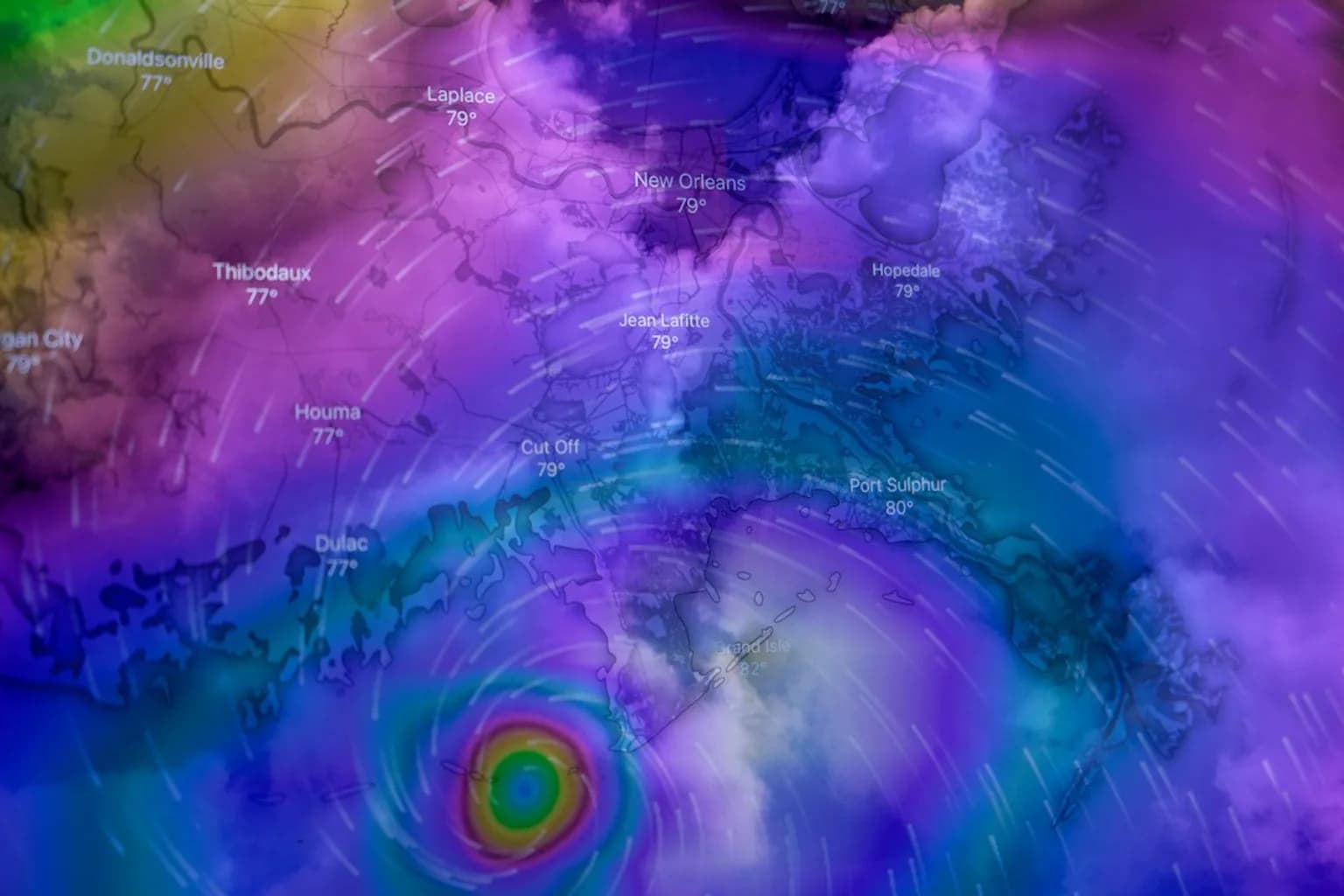
Three severe winter storms struck Texas in February 2021, setting off what became the worst energy infrastructure failure in the state’s history. Food, water, heat and electricity shortages followed, and at least 246 people died as a result of the disruptions.
For decades, forecasts beyond two weeks have been regarded as notoriously unreliable. Small differences in starting atmospheric conditions can produce entirely different outcomes, a problem described by Edward Lorenz, the longtime MIT Professor who developed the idea of chaos theory in the 1970s.
That has left the two-to-six-week period in what meteorologists call a “predictability desert”, where conventional forecasting methods fail. Researchers at MIT and their collaborators say they have developed a machine-learning tool that could improve forecasts in that interval by learning to correct systematic errors in existing models.
The tool, Probabilistic Bias Correction, or PBC, doubled forecasting accuracy over the two-to-six-week period when applied to a gold-standard forecasting model, the researchers said. It also produced forecasts that beat climatologic averages between two and six weeks for the first time.
Advertisement
Hannah Guan, a Harvard College undergraduate, led the study. Soukayna Mouatadid, a University of Toronto postdoctoral researcher, was a co-author, alongside Genevieve Flaspohler, an MIT alumna. Their research was published in Nature on 14 October 2026, in an article titled ‘Advancing subseasonal forecasting with machine learning’.
The approach placed first in a prominent international forecasting competition. Across the targets assessed, PBC improved accuracy for 91% of pressure targets, 92% of temperature targets and 98% of precipitation targets. The researchers also found a statistically significant improvement in its ability to predict extreme weather, including floods and cold snaps.
Judah Cohen, an MIT Research Scientist and study co-author, said the method improves predictions of extreme weather events. He said it could help farmers and people in the energy industry match supply with demand.
PBC runs on standard central processing units, rather than relying on resource-heavy supercomputer models. The Republic of Kenya is already testing it for monsoon predictions, and the researchers say it could improve land forecasts in most regions around the world.
The results also have clear limits. The method remains experimental and has mainly been tested against historical weather reconstructions. Its positive effect is concentrated mainly in the tropical belt, while gains in Europe remain quite limited.
Whether national meteorological services will deploy the model, and how it performs in real-time forecasting, remains unknown. The Texas storms show the potential value of earlier warnings: a more accurate view of severe weather weeks ahead could give those responsible for food, energy and emergency planning more time to prepare.
Advertisement





Comments (0)