
Before dawn on 19 September 2026, an air raid siren sounded over Riyadh for the first time since fighting resumed in July. At least one explosion was heard, while residents near the airport saw thick black smoke and King Khalid International Airport faced significant delays and cancellations.
The Houthis had attempted to strike Riyadh, Bisha, Taif, Farasan and Yanbu. Yahya Saree, the Houthi military spokesman, later said the group had used cruise missiles, ballistic missiles and drones against sensitive facilities in Riyadh and Saudi Aramco oil facilities in Yanbu.
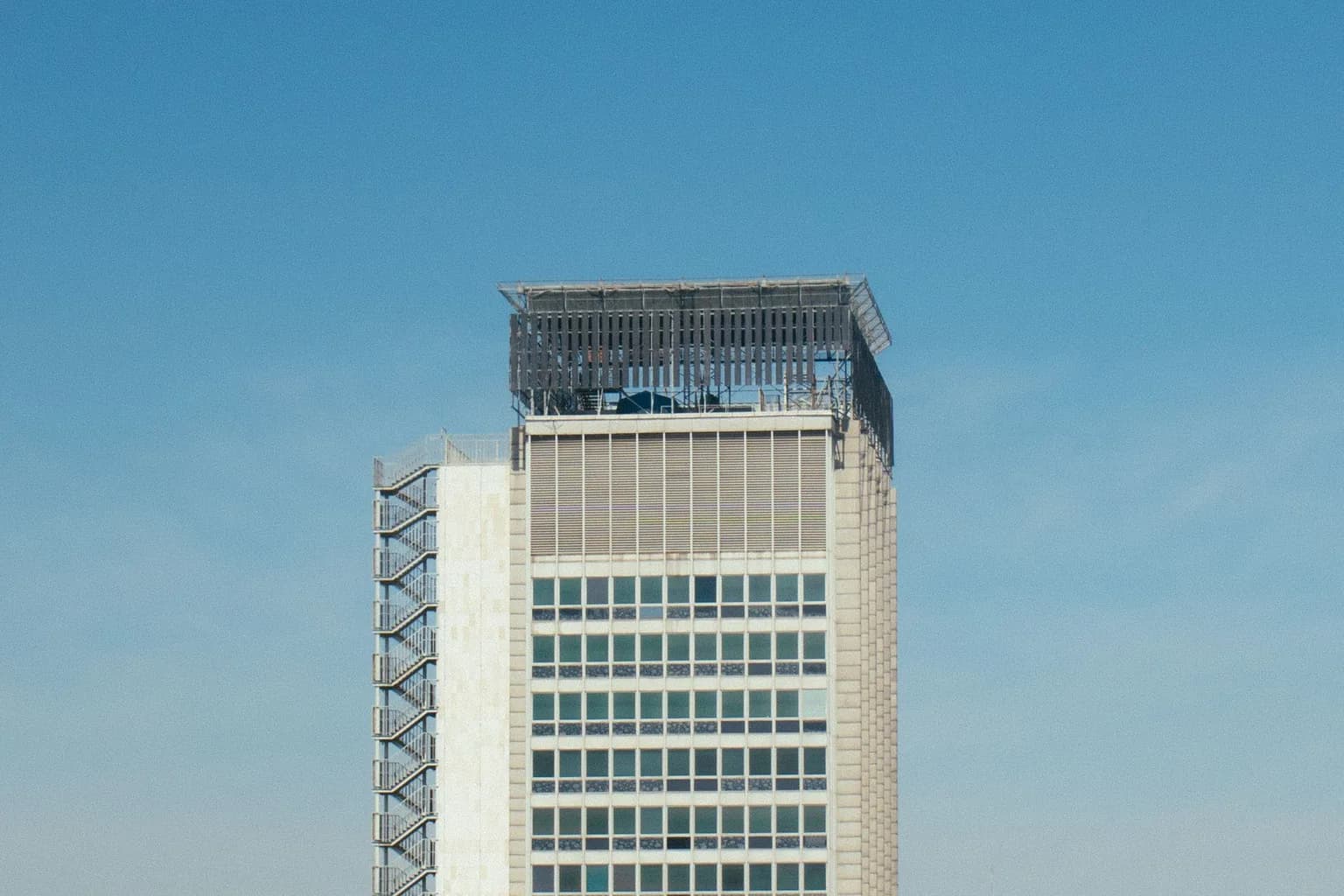
In a separate attack, a ballistic missile hit an office tower at Aramco’s headquarters complex in Dhahran, setting off a fire that spread from the sixth to the 10th floors and causing extensive damage. An Aramco employee who witnessed the strike told AFP: “[The] top three floors have gone”.
The Saudi energy ministry described the blaze as a “limited fire” in an administrative building. In Riyadh, the General Directorate of Civil Defence said debris from two intercepted cruise missiles injured two women, a man and a child, and caused “limited material damage” to 15 homes.
Advertisement
Riyadh is about 1,000 kilometres inland from the Yemeni border. The strikes showed the distance the Houthis could reach with their cruise missiles, ballistic missiles and drones.
Between July and September, Houthi attacks on Saudi Arabia rose by 333%. From 3 July to 26 September, at least 37 sites in the kingdom were hit, with 33 attacks believed to have been carried out by the Houthis and four originating from Iraq.
The group moved beyond the southern regions it targeted in July, striking Taif, Mecca and Riyadh by September.
By 11 September, the Houthis had seized the Red Sea islands of Zuqar, Hunaish and Mayyun/Perim, along with the coastal towns of al-Mocha, al-Khokha, Hays and Dhubab. The group received help from Iran’s Revolutionary Guards Corps (IRGC) and Hezbollah, according to the account of the seizures.
The Houthis also imposed a maritime embargo on Saudi Arabia from mid-July. They struck ten ships, sank one and killed or injured a total of 16 seafarers and rescuers.
Export routes under pressure
The East-West Pipeline, a route carrying approximately 4-5 million b/d, or 4-5% of global crude supply, was temporarily disrupted on 9 September. Iraq-based drone strikes damaged three pumping stations.
Four days later, Houthi drones targeted the pipeline and crude loading operations at Yanbu, the Red Sea port. Saudi Aramco suspended operations at Yanbu as a result.
Saudi Arabia shifted exports onto alternative routes. By 20 September, Aramco had loaded approximately 14 million barrels of crude onto seven very large crude carriers near Ras Tanura after rerouting exports.
Aramco also arranged sales of around 60 million barrels for ship-to-ship transfers at Oman’s Sohar port in September and October.
The East-West Pipeline restarted at reduced rates around 22 September. By 28 September, flows had recovered to roughly 3.5 mb/d, about half its 7 mb/d capacity.
Prince Abdulaziz bin Salman, the Saudi energy minister, said on 12 October that the kingdom was studying upgrades that could lift the pipeline’s capacity to as much as 10 million b/d within two to three years. Saudi Arabia and Aramco are also converting a gas pipeline to carry about 1.2 million b/d of crude within seven to eight weeks, with scope to rise to 3 million b/d through further investment.
The disruption has raised transport costs sharply. A Gulf Coast-to-Asia supertanker cost more than $80 million, roughly $40 per barrel, in the week before 12 October, compared with $10-15 million near the start of the year.
Approximately 72 industrial nodes and 8,048 companies were assessed as affected by the September 2026 disruption to Saudi export infrastructure. The shock was expected to spread over a 2–4 month horizon.
The International Energy Agency conducted a record 400 million-barrel stock release, including 172 million barrels from the US.
Kristalina Georgieva, the International Monetary Fund director, warned that the escalating Middle East conflict could have “potentially negative spillovers for everybody, everywhere”.
Limited US response
Crown Prince Mohammed bin Salman, Saudi Arabia’s de facto leader, appealed to President Donald Trump about a week before late September for US help in suppressing Houthi fire aimed at oil facilities and cities along the Red Sea coast. Trump responded only partially to the request.
The US had tried three times in 2024 and 2025 to suppress the Houthis through air campaigns. After Operation Rough Rider in March-April 2025, it concluded that air power alone could not defeat the group.
Trump declared victory over the Houthis and said they had promised to stop attacking American ships. He then withdrew US forces even though the campaign had not significantly reduced the Houthis’ ability to block the Bab el-Mandeb Strait, strike Saudi and Emirati oil infrastructure with missiles and drones, or fire ballistic missiles nearly 2,000 kilometers towards Israel.
Saree said Houthi strikes on Aramco and Riyadh airport came in response to a coalition strike on the Yemen Petroleum Company’s al-Sabaha fuel depot on the preceding Tuesday. He said that “operations towards Saudi depths will continue in the coming days”, and listed airports and oil facilities among the targets.
Two civilians were killed and two others injured in the Ras Isa attack. The coalition had warned civilians to leave before what it called the “special operation” at the al-Sabaha fuel depot.
Saudi Arabia’s cabinet, led by Mohammed bin Salman, said the Houthis would “bear the consequences” of their attacks. The immediate test is whether Saudi defences and rerouted export routes can hold against further missile and drone fire.
Advertisement

Comments (0)