
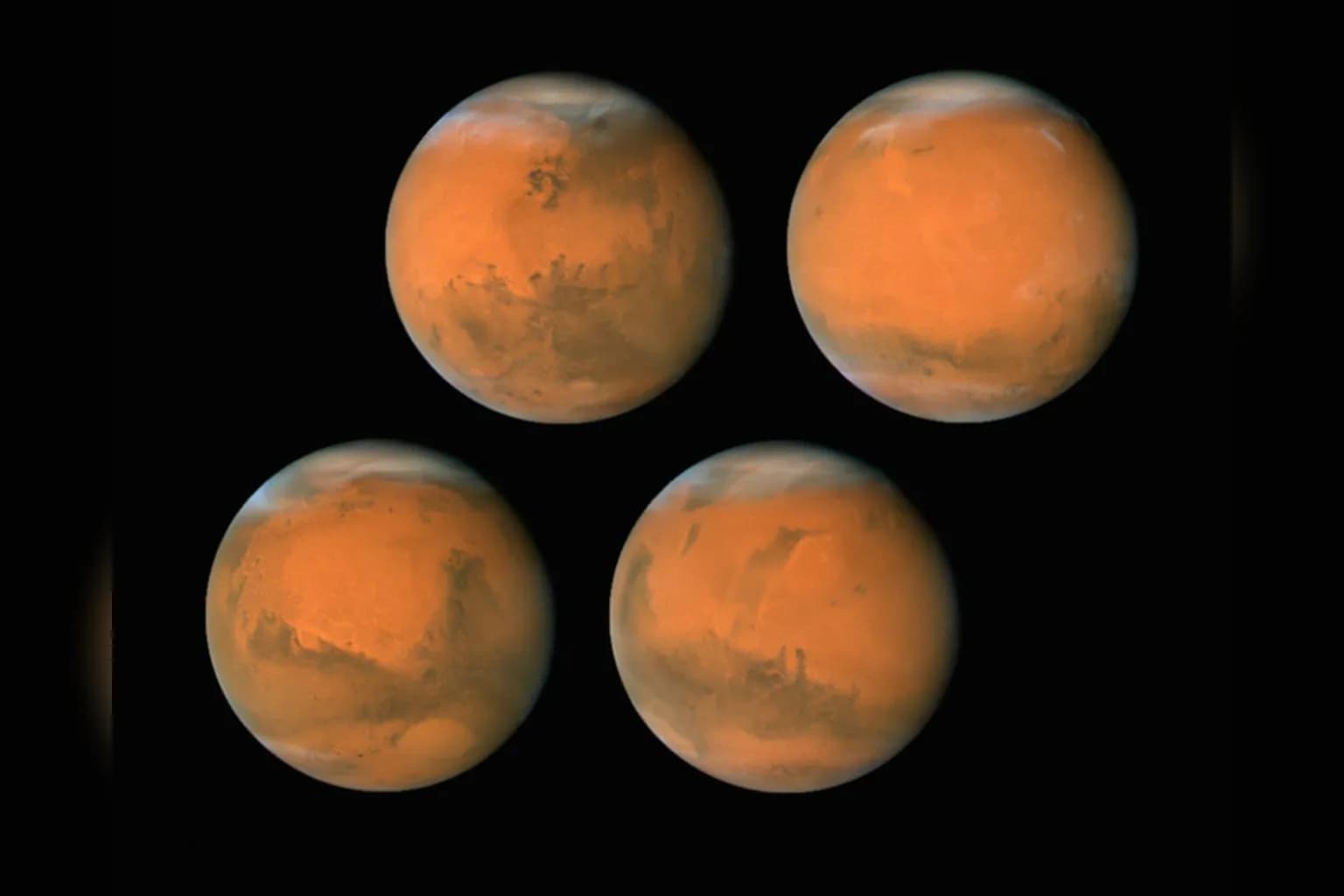
Perseverance is making its way towards an area called Idubi, crossing the region beyond Jezero Crater’s western rim known as Lac de Charmes. Jezero, in Mars’s northern hemisphere, is thought to have been flooded and to have held a lake basin billions of years ago.
On 11 October 2026, a 299.6-foot (91.31-meter) drive carried the rover’s odometer to 28.10 miles (45.22 kilometers), beyond the 28.06 miles (45.16 kilometers) travelled by NASA’s Opportunity rover. Perseverance has now driven farther than any vehicle on the surface of any world other than Earth.
The milestone came on the 2,006th Martian day, or sol, of the mission. Perseverance covered the record distance in five and a half years, while Opportunity took almost 15 years. Opportunity explored Mars from 2004 to 2018.
Perseverance landed in February 2021 with an original mission that called for no more than 12.4 miles of driving. Its autonomous navigation system, AutoNav, has handled more than 90 percent of its total driving distance, compared with about 5 percent for Opportunity and Spirit. The rover processes 600,000 measurement points each time it assesses terrain, compared with 20 points for Sojourner. It can travel as much as 1,351 feet (412 meters) in a single sol.
Advertisement
The journey has also produced 29 rock and soil samples from the crater floor, an ancient river delta and the crater rim. Some of the rocks are believed to be about 4 billion years old. A sample called Cheyava Falls contains a potential biosignature.
NASA has approved Perseverance’s first mission extension, which began in October and is expected to carry exploration through roughly the end of 2028.
Steven Lee, the project manager for NASA’s Perseverance and Curiosity rovers, said the mission’s engineering hardware and instruments were “in excellent shape with all redundant systems still available,” and were “capable of operating well into the 2030s, likely beyond.”
Advertisement


Comments (0)