
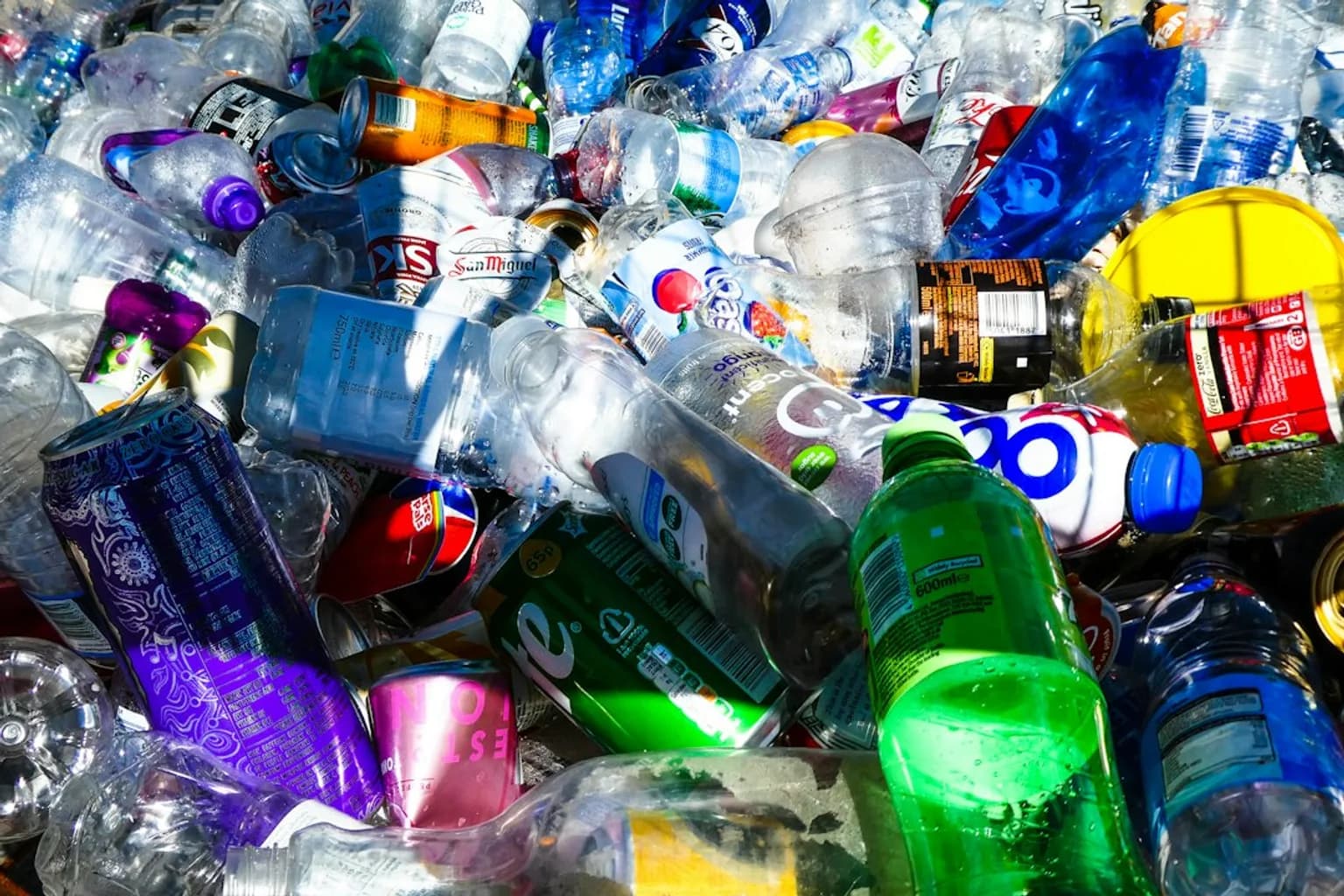
At the Australian National University, Dr. Elwy Abdelkader and Prof. Thomas Huber co-authored work that altered the PET-degrading enzyme PETase with azatryptophan, a synthetic amino acid. The change replaced a carbon-hydrogen pair in standard tryptophan with a nitrogen atom.
The result was an enzyme that cut PET polymer chains in half the time while retaining full resistance to thermal degradation. PET is the plastic used in beverage bottles, and more than 350 million tons of PET waste are generated annually.
The work addresses a long-running limitation in efforts to use enzymes against plastic waste. Naturally occurring PET-degrading enzymes can work, but are too slow and fragile for industrial use. Earlier fast-acting variants lost thermal stability, while heat-resistant versions worked too slowly for commercial application.
Enzyme engineering had previously been limited to the 20 standard amino acids encoded in nature. A researcher said: “What we have shown is that you can go beyond this limit by making an incredibly precise change – down to a single atom – while largely preserving the structure and stability of the enzyme.”
Advertisement
The Australian research was published in the peer-reviewed journal Angewandte Chemie International Edition. Its researchers also developed PETra, a fluorescence-based test using a soluble liquid substitute for plastic that emits light during the reaction. PETra reduced measurement time to only a few minutes, compared with entire days for traditional enzymatic activity tests.
Computational tools are widening the range of possible enzyme designs. Researchers at Meta AI scaled a protein language model to 15 billion parameters and found that atomic-level structure could emerge from one protein sequence without looking at related sequences. Structure prediction can show where an enzyme contacts a plastic surface, identify mutations that may improve binding or stability, and indicate how altered variants are likely to fold.
At Google DeepMind, Pushmeet Kohli is vice president of science and strategic initiatives at the organisation behind AlphaProtein Novo. The generative model is designed to create enzymes from scratch, rather than adjust proteins already found in biology. Its preprint was released on 5 October.
DeepMind used the system to design an enzyme that breaks down DEHP, a phthalate plasticizer, and another that synthesises piperidine. Neither enzyme exists anywhere in nature. The piperidine-producing enzyme operates at 99 times the rate of the existing industrial method.
Piperidine is a six-membered ring used as a building block in drugs including antihistamines and antipsychotics. DEHP has been linked by regulators to reproductive harm and liver damage, while the Environmental Protection Agency considers it a probable carcinogen.
Plastic waste remains chemically varied, and an enzyme that degrades one kind of plastic generally has little effect on another. The researchers said the atomic-modification approach could potentially be used to engineer enzymes for sustainable manufacturing, biotechnology and medicine.
Whether these designs can work at industrial scale, retain their speed in real-world waste processing, or be applied broadly across other enzyme classes remains unknown.
Commercial interest in AI-led molecular design is already substantial. Isomorphic Labs, DeepMind’s drug-discovery spinout built on the AlphaFold lineage, has raised roughly $2.6 billion in total, including a $2.1 billion round that closed earlier this year. The company aims to place its first AI-designed drug candidates into clinical trials by the end of 2026.
Advertisement





Comments (0)