
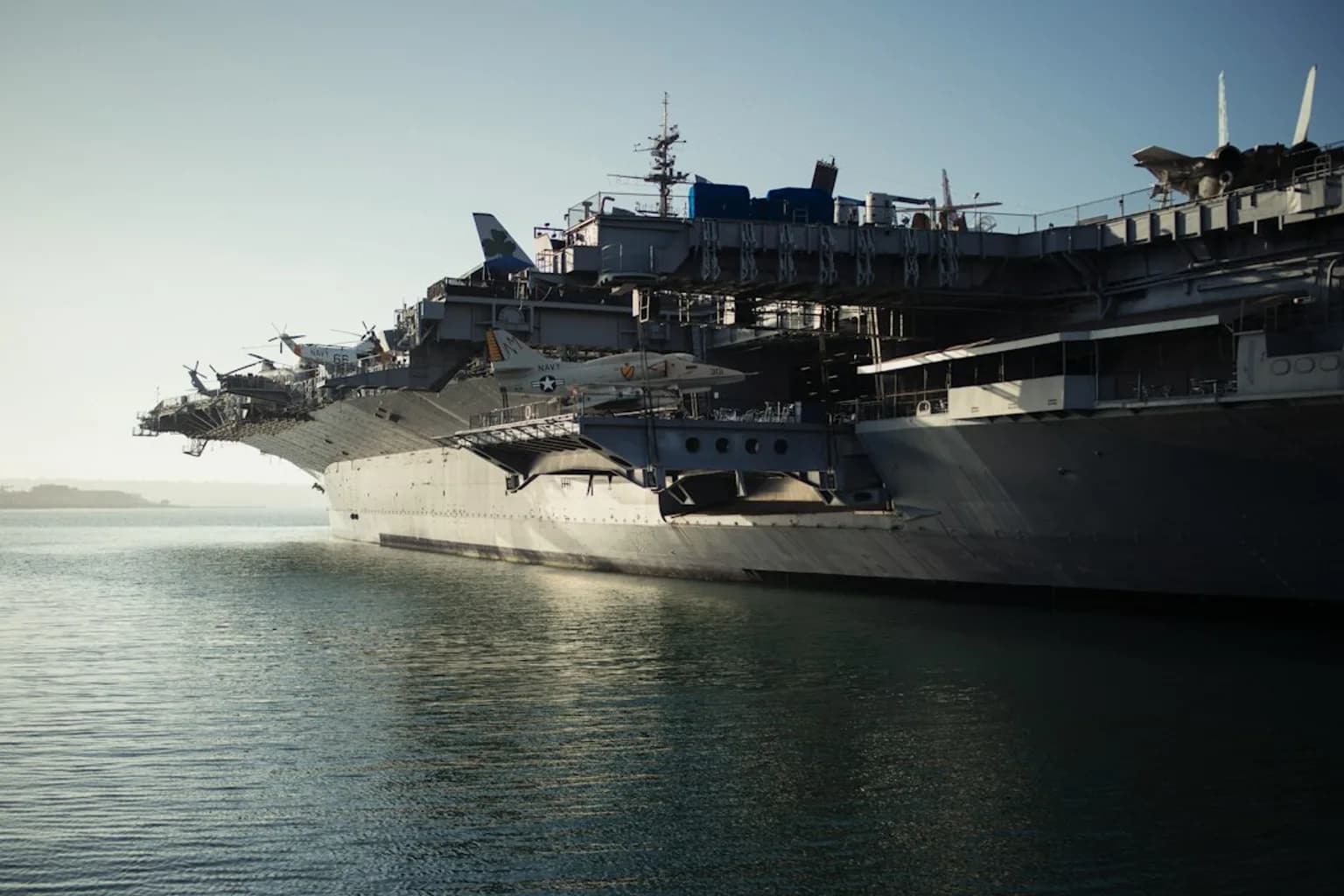
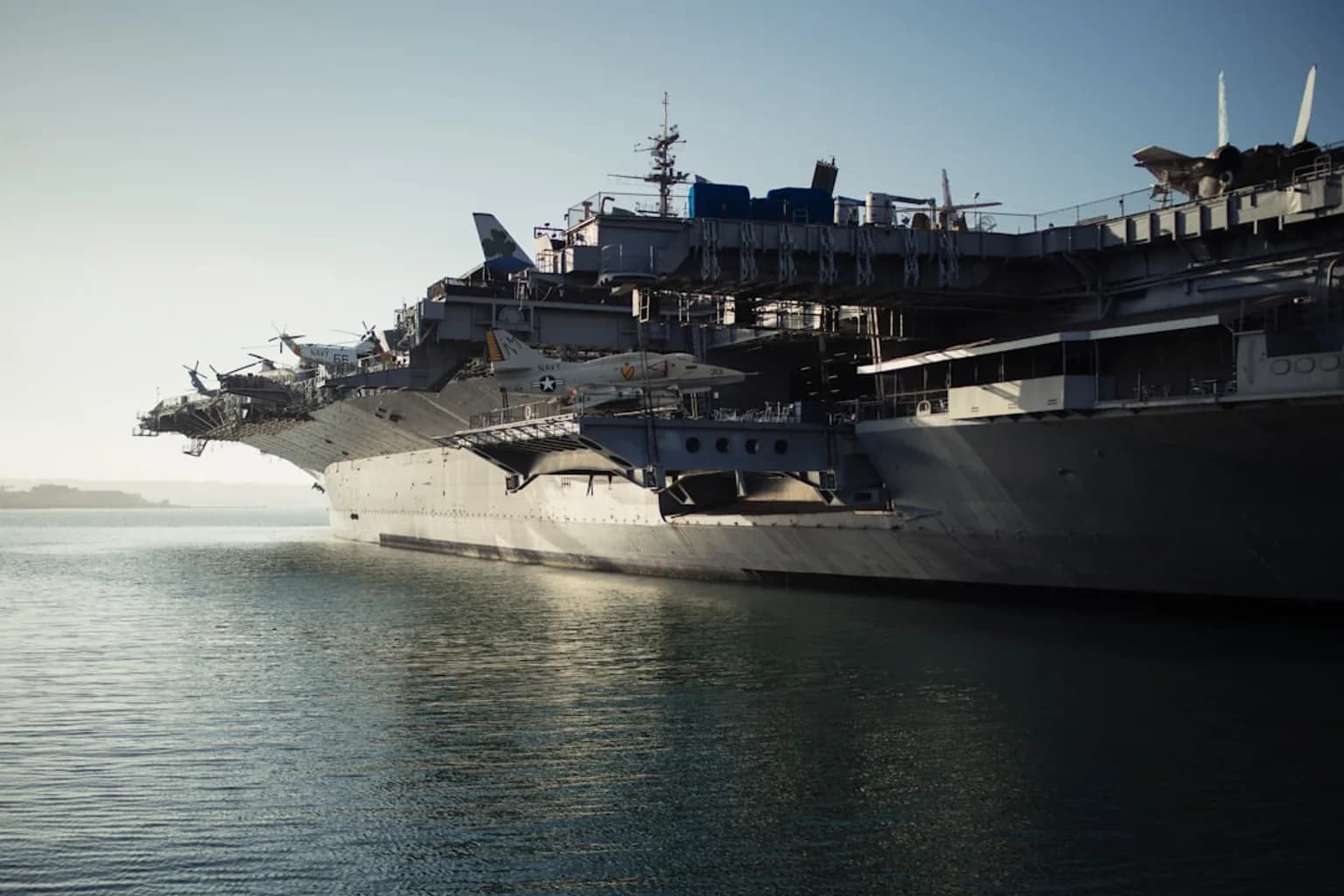
The USS Theodore Roosevelt left Naval Base San Diego, California, on 27 September with an unfamiliar companion in its strike group: the Seahawk, an autonomous vessel sailing alongside the carrier and its escorts from the US West Coast.
The deployment is the first time the United States has sent a large unmanned surface vessel with a carrier strike group heading to the Middle East. The Navy has integrated the medium-sized Seahawk, built by the US defence contractor Leidos, into the Roosevelt strike group for the first time in its history.
The Seahawk is 42 meters long and has a trimaran design, with a central hull flanked by two slender hulls. It weighs 147 metric tons and has two diesel engines carrying 53,000 liters of fuel. The vessel is designed to operate for months without a crew or regular maintenance.
Hung Cao, the acting Navy secretary, announced the deployment at an Association of the United States Army event in Washington, D.C. He called the Roosevelt “the first aircraft carrier to deploy with a large unmanned surface vessel,” and described the mission as “the first carrier strike group to ever deploy with a large-size unmanned surface vessel”.
Advertisement
“A force multiplier,” Cao said. He compared adding unmanned vessels to a strike group to “having more guns deployed”.
The Seahawk uses artificial intelligence, radar and advanced sensors to navigate autonomously. Cao said such vessels do not need a crew or the complex life-support systems required to protect one. He said they are easier to build than conventional warships and will change the nature of naval warfare.
Each Seahawk costs around 35 million dollars. Its payload on this deployment, including whether it carries weapons, has not been specified.
The vessel has been tested before joining the Roosevelt. During the 2022 Rim of the Pacific exercises, it carried a towed sonar to test anti-submarine warfare support capabilities. It also underwent at-sea refuelling tests in April and September.
The Roosevelt is expected to reach the Middle East by the end of this month. Two aircraft carriers are already deployed there, and its arrival will temporarily bring the total to three.
Autonomous vessels have already been used in the region in more limited roles. US forces previously deployed a Corsair II autonomous surface vessel, built by Saronic Technologies Inc., to help recover two Apache helicopter pilots in the Straits of Hormuz. Unmanned underwater vehicles have also been used to demine an area there.
Austin Gray, cofounder of Blue Water Autonomy, a US startup making unmanned surface vessels for the Navy, said larger vessels can carry missiles, drones and non-kinetic systems such as sensors or electronic jamming equipment. He said advances in the field could open missions including logistics, refuelling and submarine-hunting.
Small, speedboat-style sea drones have played a crucial role in conflicts around the world in recent years. The USS Abraham Lincoln Carrier Strike Group returned home with kill marks displayed on its island superstructure, showing the part it played in the fight with Iran.
The Navy has proposed deploying over 30 medium unmanned surface vessels and thousands of small unmanned surface vessels in the Indo-Pacific region by 2030. The Seahawk’s deployment with the Roosevelt places that longer-term plan alongside a carrier force now bound for the Middle East.
Advertisement


Comments (0)