
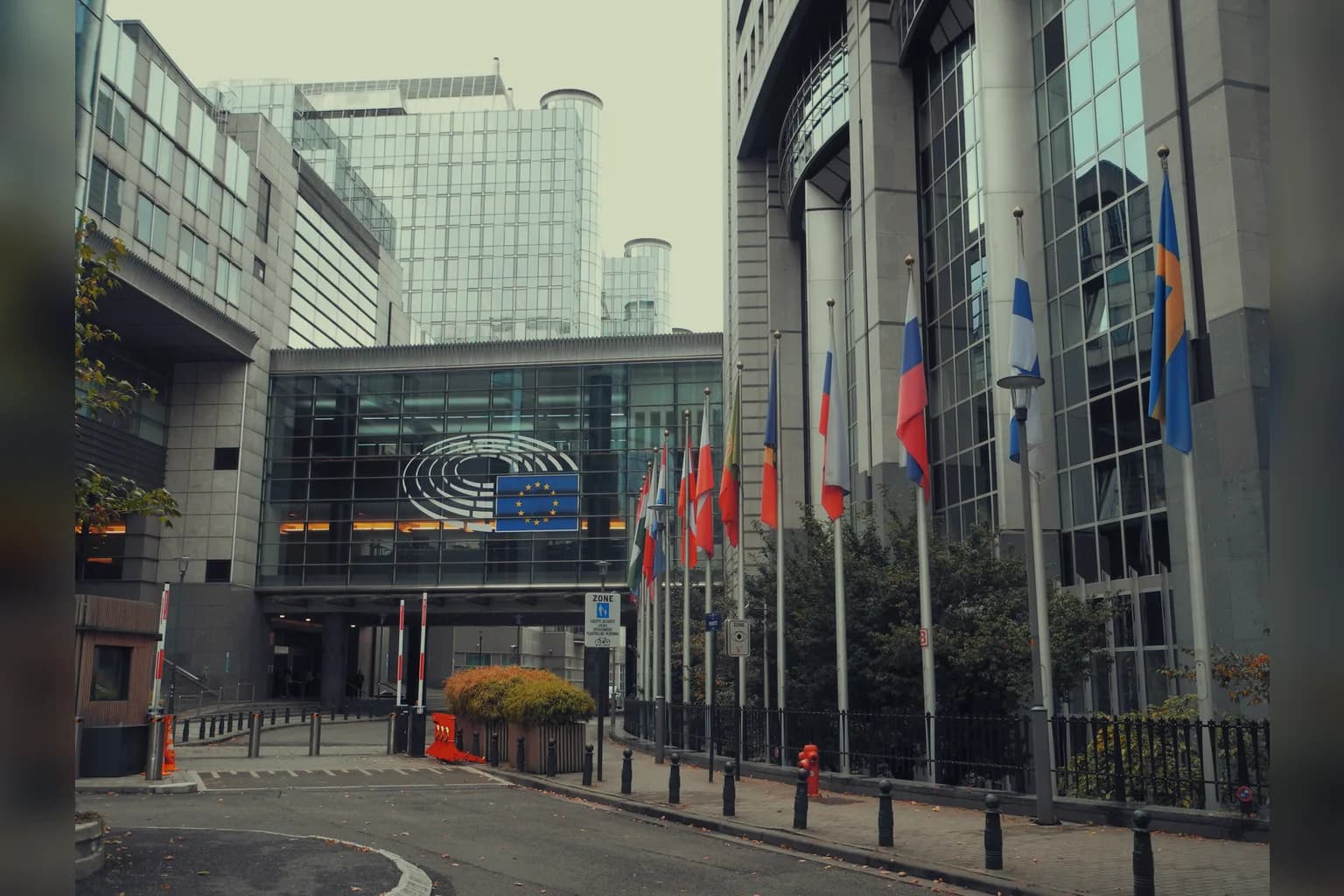
EU leaders left Brussels without an agreement on the bloc’s next long-term budget after two days of meetings. The summit, chaired by European Council President António Costa, also covered trade with China as leaders sought “fast solutions to spiralling energy prices”.
The failure leaves the EU without a settled plan for a budget cycle that comes every seven years and sets funding for its main priorities. The choices reach from support for farmers and poorer regions to defence, migration control and efforts to strengthen Europe’s economy.
The European Commission had proposed a €1.985 trillion package for 2028 until 2034, including new spending on defence, competitiveness and migration.
A recent compromise proposal stood at €1.826 trillion.
Advertisement
The existing long-term budget, covering 2021 until 2027, has a scope of €1.2 trillion.
Dublin, holding the symbolic EU Council presidency, had also proposed cuts of up to €141bn from the long-term budget. Summit discussions described that reduction as about eight percent less than the Commission proposal.
Friedrich Merz, the German chancellor, spoke for a group of wealthy northern governments seeking a much smaller budget. Germany, Austria, the Netherlands, Denmark, Sweden and Finland say the proposed scope must be drastically reduced if money is to be added for new priorities.
“We are in very, very difficult negotiations regarding the future finances of the European Union,” Merz said. “We must significantly reduce the common budget compared with the commission's proposals. No member state of the European Union can afford this.”
The Frugals want “several hundred billion” more in reductions, mainly from agriculture and cohesion funds. Swedish Prime Minister Ulf Kristersson called the proposals under discussion “simply not acceptable”.
Rob Jetten, the Dutch prime minister, said the group’s aim was to downsize and modernise the budget.
Eastern and southern governments, led by Spain, Italy and Poland, sought to preserve agricultural and cohesion subsidies. Seventeen EU member states call themselves Friends of Cohesion and have criticised the savings.
Italian Prime Minister Giorgia Meloni said she would not support cuts to agriculture and cohesion subsidies at the Brussels meeting. “In my view, there is no contradiction between traditional policies and new priorities,” she said.
“On the contrary, there can be no security without food security, and no genuine competitiveness without equal standing for all regions,” Meloni said.
Leaders could not settle the amounts for Common Agriculture Policy payments, overseas development aid, or cohesion funding for roads and infrastructure in poorer EU regions.
Defence spending sharpened the argument over what should give way. Many leaders want more money for defence and security, migration control and a bumper competitiveness fund, while uncertainty over Trump administration support for Ukraine has added to the pressure.
Denmark’s prime minister, Mette Frederiksen, said there was no alternative to funnelling much more money towards defence, particularly while the Trump administration was questioning its support for Ukraine.
Latvian Prime Minister Andris Kulbergs said the economy was declining in Latvian regions bordering Russia while Latvia also had to spend heavily on defence. His comments reflected the competing demands on eastern members seeking development funding and stronger security.
Costa had initially hoped for a compromise by the end of the year. Merz said he was still aiming for an agreement by then, despite the difficult negotiations ahead.
Advertisement

Comments (0)