
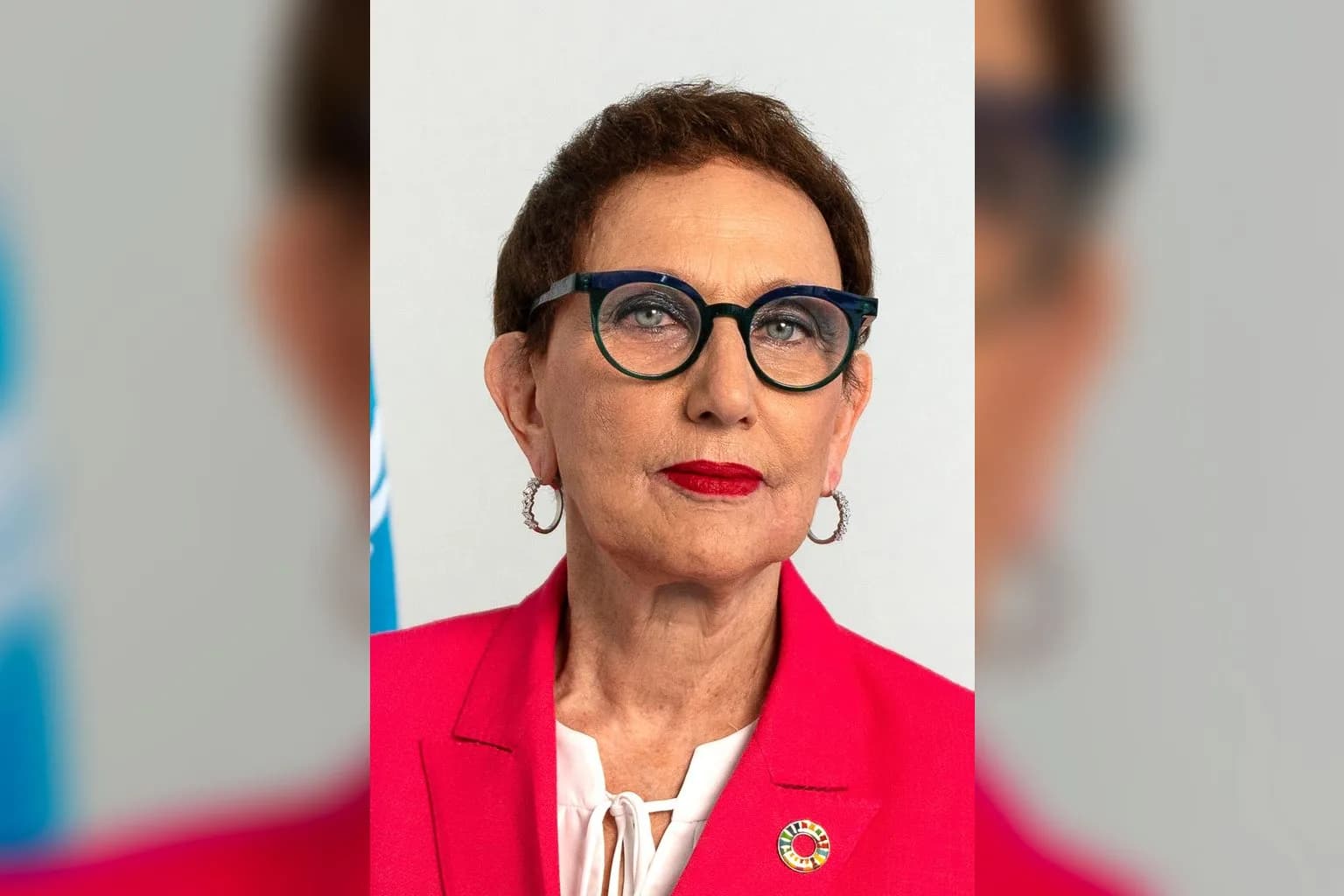
Ahead of a Friday Security Council poll on a new UN secretary-general, Rebeca Grynspan Mayufis told Reuters that the organisation had become too cautious in how it acts and takes decisions.
“I think that the UN has become too risk-averse,” Grynspan said. “You are the one that has to take the cost of rejection, the cost of failure, and try again. That's the job of the UN.”
Grynspan is a 70-year-old economist and former Costa Rican vice president. She is the Secretary-General of the UN Conference on Trade and Development, known as UNCTAD, and is on leave for her candidacy. During her time leading UNCTAD, she cut 20% of its posts while sharpening its focus.
Her parents were Polish Jews who fled to Costa Rica during Nazi rule. If selected, Grynspan would become the first Jewish and female UN Secretary-General.
Advertisement
Costa Rica nominated her in March 2026, although one source dates the announcement to October 8, 2025. She is one of seven candidates remaining in the contest to succeed António Guterres, whose second five-year term ends on December 31, 2026.
Five Security Council straw polls were held between July 30 and October 15, and Grynspan emerged as a frontrunner, narrowly leading in four of them. Latin America is widely seen as due to provide the next secretary-general, though the regional expectation offers no certainty.
On 16 October 2026, the Security Council held its sixth secret ballot. It used colour-coded ballots for the first time, allowing council members to see whether a permanent member opposed each candidate. Grynspan received nine “encourage” votes, five “discourage” votes and one “no opinion”. Two of her “discourage” votes came from permanent Security Council members.
All seven candidates received at least two opposing votes from the council’s five permanent members. The council can recommend a candidate to the General Assembly only with at least nine positive votes from its 15 members and no “discourage” vote from a permanent member. Council officials have less than three months to choose Guterres’ successor.
Grynspan’s proposed remedy for the UN’s difficulties includes cutting jobs, curbing bureaucracy and ending overlapping work among agencies. “Cost cutting is not enough. Yes, you can cut costs and make everything worse. If you don't reform, you will do everything worse than before,” she said.
The next secretary-general will take charge of a 193-member body that has been largely sidelined in the wars in Ukraine and the Middle East. The winner will also face several wars, reduced American contributions and declining political relevance after Washington withdrew from dozens of UN agencies.
Mike Waltz, the US ambassador to the UN, has criticised what he called bureaucratic “bloat” and duplication, and has urged the organisation to focus more clearly on peacekeeping. Grynspan’s argument is that savings alone will not restore the institution’s capacity to act.
Advertisement




Comments (0)