
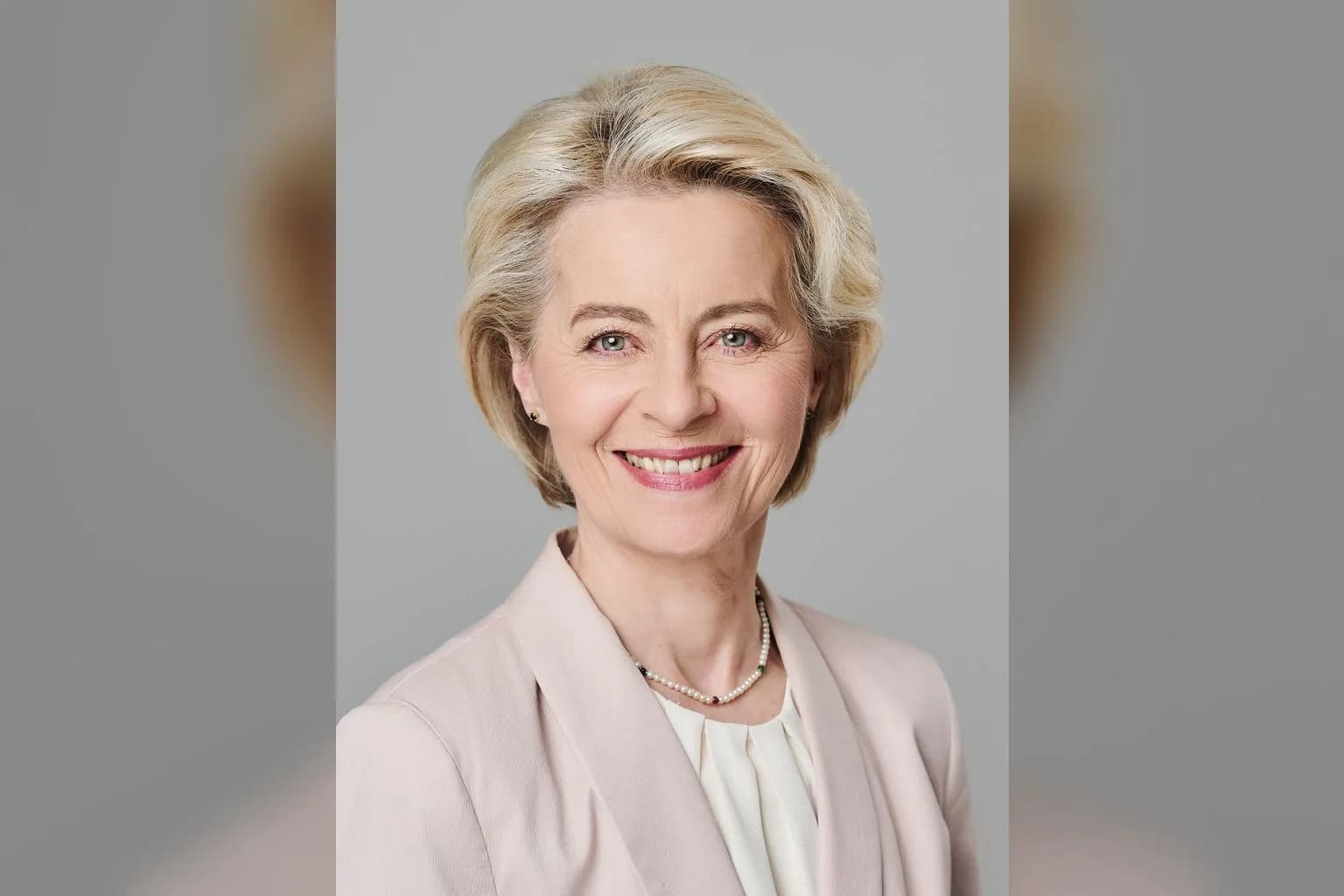
Ursula von der Leyen stood before reporters in Brussels on 16 October 2026 with a new response to Europe’s trade imbalance with China: an instrument called ‘Diversify EU’, due to be presented in December. The president of the European Commission said it would address imbalances with trading partners, especially China.
The announcement came as the EU’s trade deficit with China reached one billion euros a day. Chinese exports to the EU have continued to rise for almost three years, while European exports to China have been falling slowly.
For the Commission, the problem reaches beyond a conventional deficit. The gap has grown consistently over the past decade and now amounts to around 2 percent of annual EU gross domestic product. Machinery and cars have shown the largest increases among Chinese products entering the EU.
Maros Sefcovic, the European Commissioner for Trade and Economic Security, put the stakes starkly on 22 September. “The debate on trade relations with China goes far beyond the traditional discussion on the trade balance. It is essential to make clear that, given the scale of the deficit, the speed at which it is growing and its impact on key economic and industrial sectors in the EU, we are talking about the future of our economy, our industry and the European social model”.
Advertisement
EU leaders had already instructed the Commission at the June 2026 European Council to devise workable policies in response to what has been termed the ‘second China shock’. The first China shock followed China’s accession to the World Trade Organization in 2001.
China’s industrial strategy includes ‘Made in China 2025’. Under its ‘dual circulation’ framework, it has sought to reduce reliance on imports in key sectors while strengthening exports. Chinese exports have been driven by deep market distortions, an undervalued currency and weak domestic demand.
Sefcovic travelled to Beijing on 8 and 9 October 2026 for an EU dialogue that had been required to “yield results” by October. European officials privately doubted that Beijing would change course.
Von der Leyen said Diversify EU would be “faster and more precise” and “will not depend on the country of origin and will allow companies to reduce risks more quickly”.
She also proposed a “solidarity mechanism” to determine what can be done when an EU member faces coercion or retaliation by a third country.
The Commission will develop a further instrument for “decisive action that allows limiting access to the single market, when it is in the interest of the Union, quickly and immediately”.
Von der Leyen said the proposed measures did not replace the EU’s current trade defences. “The new tools are not an alternative to the full use of existing instruments”, she said, which must be used “to the maximum”.
The call for action has support among the EU’s largest economies. France and Germany reached an agreement on the automotive sector that included softer objectives for reducing emissions from combustion cars for 2035 and the promotion of “European preference”.
The heads of state and government of the Twenty-Seven urged the European Executive to broaden EU tools for defence and commercial protection, particularly in relation to China. France and Germany had sought new Commission instruments against unfair commercial practices, including a diversification mechanism to curb dependence on particular suppliers.
Stéphane Séjourné, a French official, argued for a tougher approach to China over the trade imbalance. Teresa Ribera, a Spanish official, favoured dialogue and opposed creating barriers with China. Pedro Sánchez, Spain’s prime minister, argued that the EU needed to cooperate with China while managing differences over the trade deficit.
The Commission has also selected 46 new strategic critical mineral projects intended to reduce dependence on China for essential inputs.
Alongside the new instruments, the EU has pursued diversification agreements with Mercosur, Mexico, Australia, Indonesia and the Philippines. It announced a breakthrough with the Philippines that it expects to lead to a free trade agreement within weeks.
Advertisement


Comments (0)