
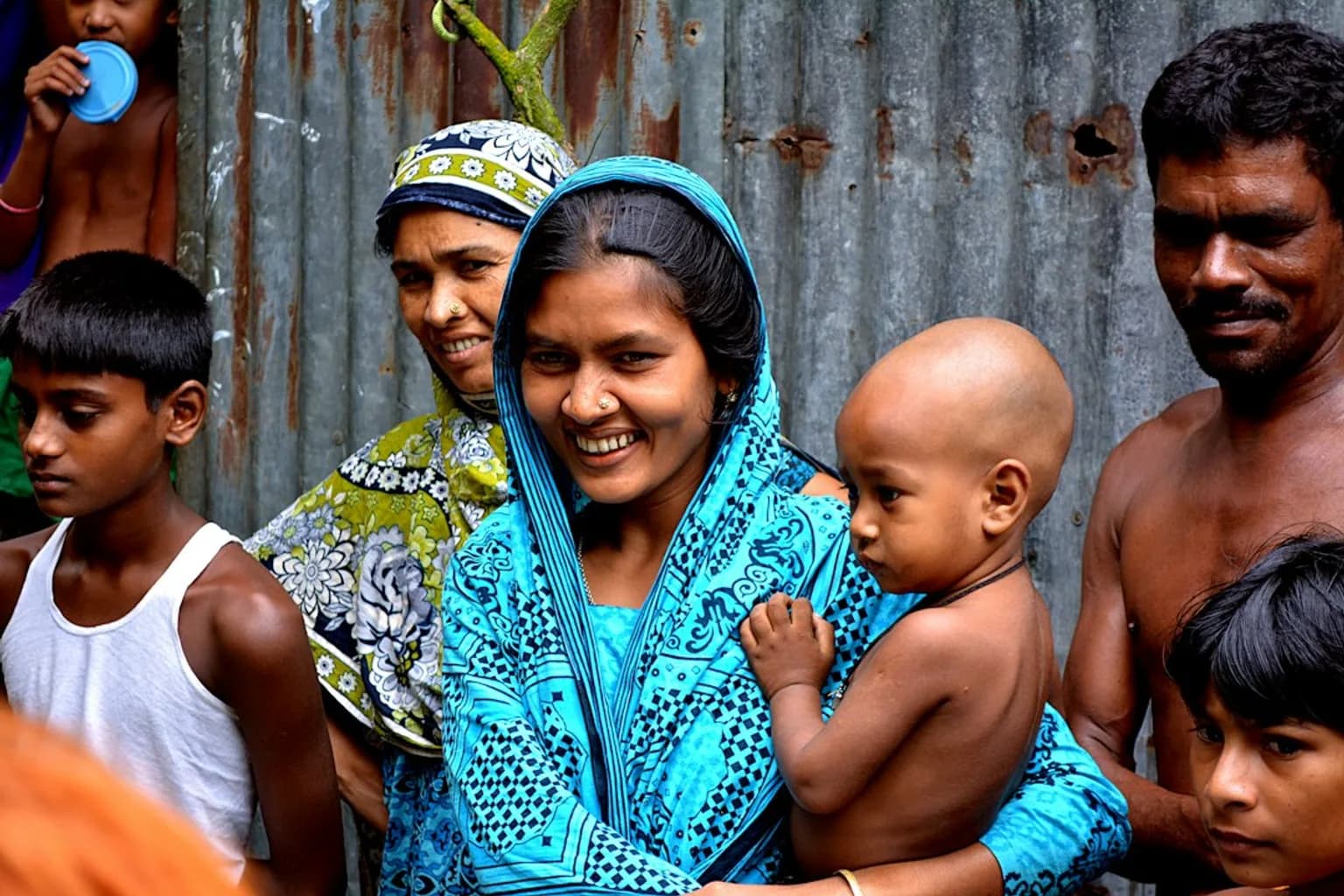
In the first week of September 2017, Antonia Mulvey was on the Bangladesh-Myanmar border, interviewing women and children who had fled across it days earlier. She was among the first three investigators sent by a UN fact-finding mission, with a brief covering sexual violence and crimes against children. Mulvey is now executive director of Legal Action Worldwide, which represents Rohingya witnesses in the case.
The people Mulvey met had come from a mostly Muslim minority that has lived for generations in western Myanmar's Rakhine State. Northern Rakhine was the only part of Myanmar where the Rohingya formed a majority.
Myanmar's 1982 Citizenship Law excluded the Rohingya from the country's officially recognised ethnic groups, leaving most stateless. The military later launched a brutal crackdown that drove hundreds of thousands from their homes into neighbouring Bangladesh.
There are now 1.2 million Rohingya living in precarious refugee camps in Bangladesh.
Advertisement
Evidence presented in The Hague describes massacres, systematic destruction of villages, denial of citizenship and deliberate starvation. Myanmar's state and its lawyers call the Rohingya 'Bengalis'.
The case has strong backing from the Organisation of Islamic Cooperation, a bloc of 57 Muslim-majority states. Myanmar's military junta took power in a 2021 coup and has strategic alliances with China and Russia, which provide diplomatic cover at the UN Security Council.
The International Court of Justice is expected to rule in the coming weeks on whether Myanmar committed genocide against the Rohingya. The central question is whether the acts set out in the evidence meet the legal definition of genocide.
A ruling against Myanmar would make it the first state the ICJ has found fully responsible for committing genocide. Michael Becker, a professor of international law at Trinity College Dublin, has described the proceedings as a crucial opportunity for the court to clarify and develop genocide law, with major repercussions for South Africa's case against Israel.
South Africa's case concerns Israel's war against Palestinians in Gaza, where the confirmed death toll has reached almost 75,000 people.
An ICJ judgment is legally binding. The court has no police force or army, however, and its decisions do not enforce themselves.
Advertisement

Comments (0)