
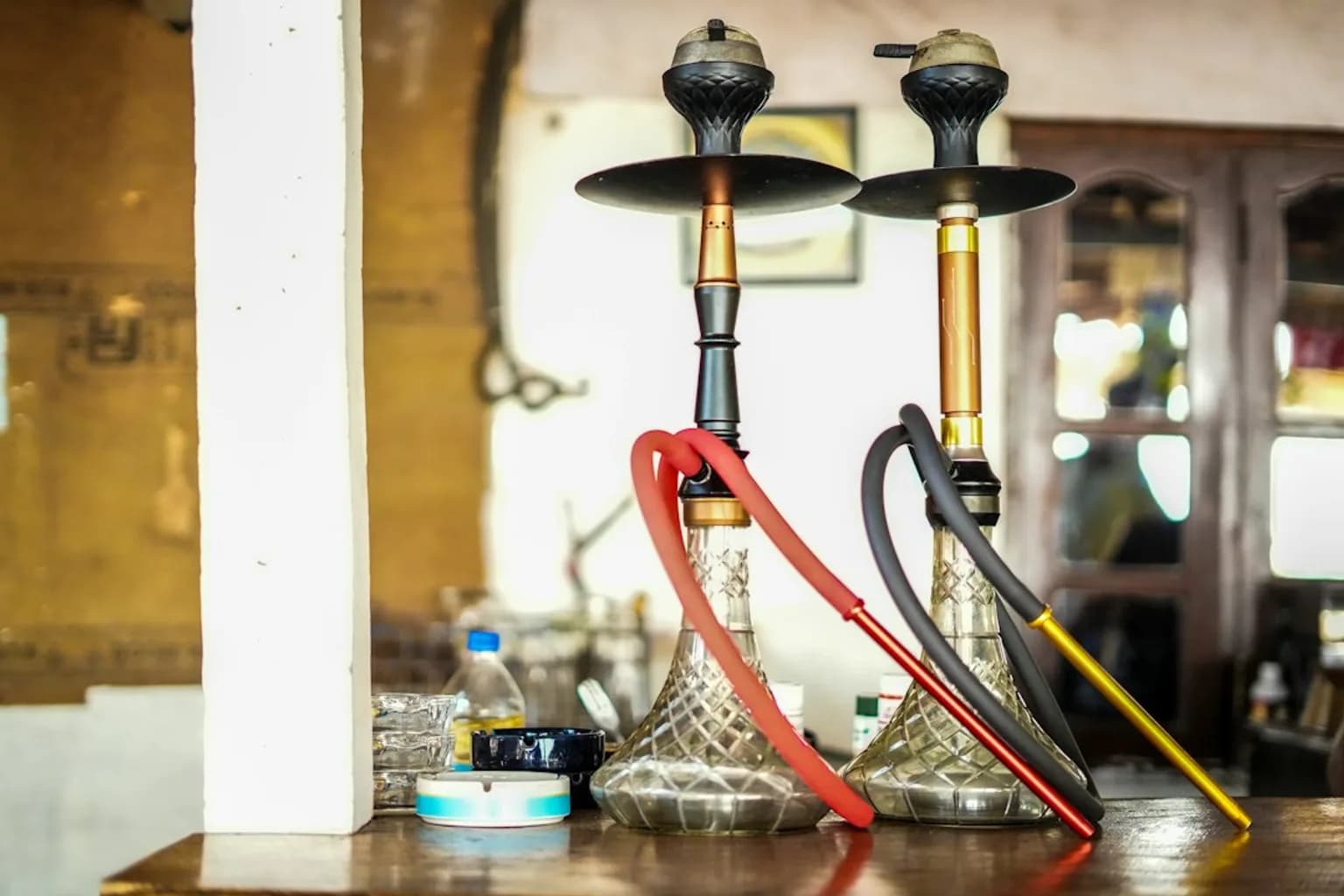
Dr. Mahdi Sheikh, a scientist in the early detection, prevention and infections branch at the International Agency for Research on Cancer (IARC), presented an estimate at the World Cancer Congress in late September that puts the future toll of water-pipe smoking at close to 1 million lung cancer cases worldwide.
Researchers at IARC combined figures on water-pipe use, cancer risk and WHO projections from 78 countries. They estimated that water-pipe smoking would cause 944,700, or 1.1 percent, of the estimated 82 million lung cancer cases globally between 2025 and 2050.
The Western Pacific region is projected to have the largest regional burden, with 350,400 new water-pipe-related lung cancer cases over the 25-year period.
Advertisement
Relative to its population, the Eastern Mediterranean region had the highest share of lung cancer linked to water pipes, at 5.1 percent. Countries with a low Human Development Index face a 3.3 percent share of lung cancer cases attributed to water pipes.
“Most of these countries have a low or medium human development index … it means that the burden is going to cluster in the countries with the least resources, which could bear the least burden of cancer,” Sheikh said.
Water-pipe smoking is also known as hookah, shisha or narghile. A single hookah session usually lasts 30 to 60 minutes or longer, and research has consistently found that the water in the device does not remove harmful substances.
The smoke contains at least seven known carcinogens, 39 central nervous system depressants and 31 respiratory irritants. Roughly 90 percent of the carbon monoxide in hookah smoke came from charcoal, while charcoal accounted for 75 to 92 percent of the cancer-linked polycyclic aromatic hydrocarbons, or PAHs.
Misunderstanding of the product may also shape perceptions of its risks. Roughly 27 percent of college students believed hookah did not contain tobacco, while 38 percent thought it was nicotine-free.
Traditional cigarettes account for 60 to 70 percent of lung cancer cases. Water-pipe tobacco is nevertheless widely sold: 79 percent of parties to the WHO Framework Convention on Tobacco Control said it was available on their national markets in 2023.
As of 2023, 57 percent of parties to the treaty had put in place regulations specific to water-pipe tobacco.
The IARC study has yet to be published.
Advertisement
Comments (0)