
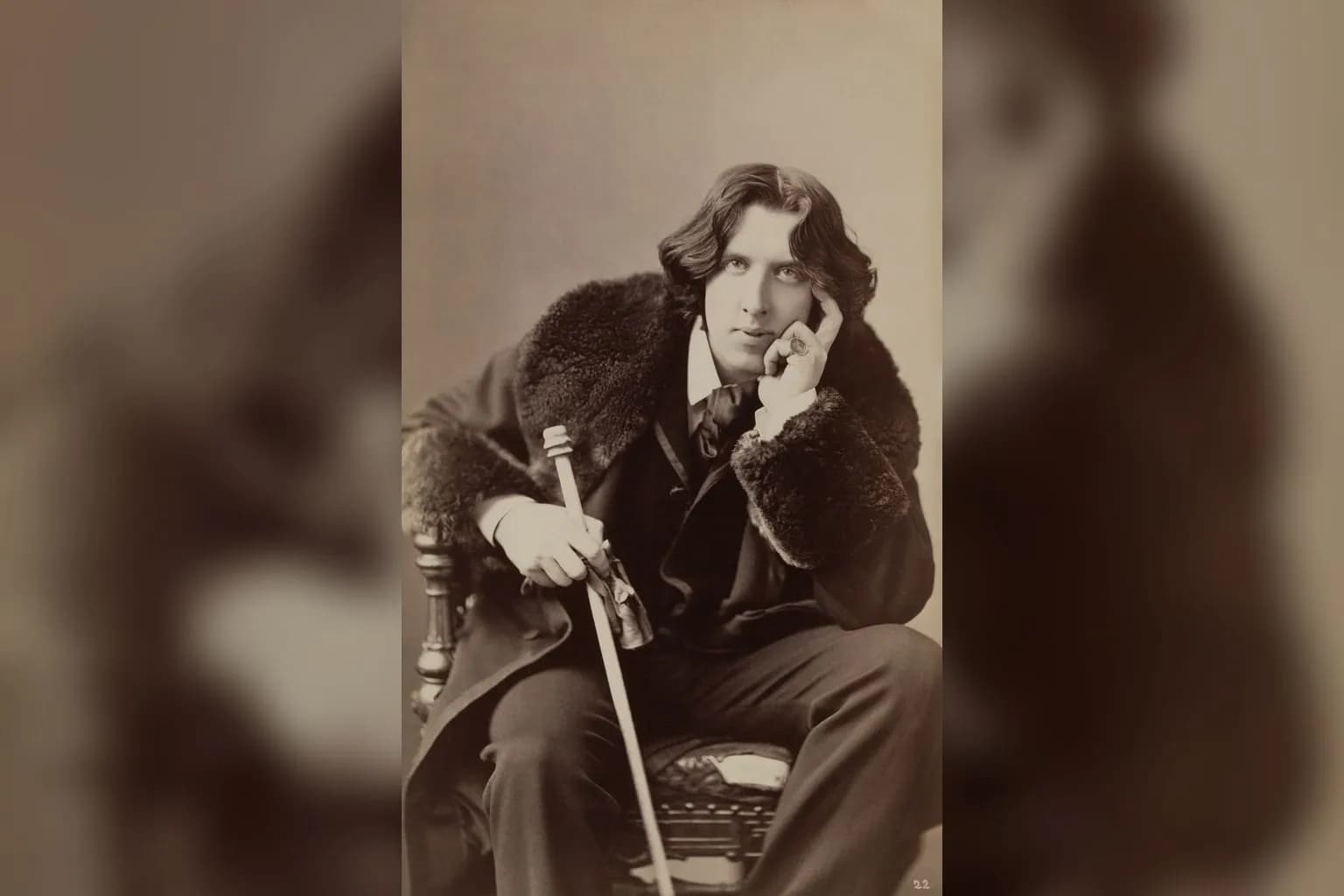
At the Albemarle, Wilde’s members’ club, John Sholto Douglas, the Ninth Marquess of Queensberry, left a calling card in February 1895. It read: ‘For Oscar Wilde, posing somdomite [sic]’.
Wilde was then at the height of his fame and fortune, with an established career in poetry, literature and plays. His longest relationship was with the poet Lord Alfred Douglas, who was 16 years younger than him. Queensberry was Douglas’s father.
The British Library has now returned to one small consequence of the crisis that followed. In 2025, it renewed his library card, 130 years after the card was revoked.
Queensberry’s card accused Wilde of being a “somdomite”, a misspelling of “sodomite”. Wilde sued the marquess for libel, though the case collapsed after evidence of Wilde’s relationships was produced. Wilde had relationships with several men between 1885 and 1895.
Advertisement
He was arrested and tried for gross indecency in April 1895. On 13 November 1895, Wilde was sentenced to two years of imprisonment and hard labour.
The British Library, then the British Museum, revoked Wilde’s card a few weeks after his conviction for homosexual acts. The renewal reverses that decision, though the available information does not give the library’s reasons for doing so.
Wilde was sent to Reading Gaol to serve his sentence. His wife, Constance Lloyd Wilde, with whom he had two sons, Cyril and Vyvyan, left the UK with the boys after his imprisonment and changed their surname to Holland. She visited Wilde only once during his imprisonment, to tell him that his mother had died.
While in prison, Wilde wrote in his epistolary novel De Profundis: ‘With freedom, flowers, books, and the moon, who could not be perfectly happy?’
The restored card does not alter that sequence. It does place the library’s own 1895 response alongside the reputation of a writer whose work had already made him famous.
Advertisement



Comments (0)