
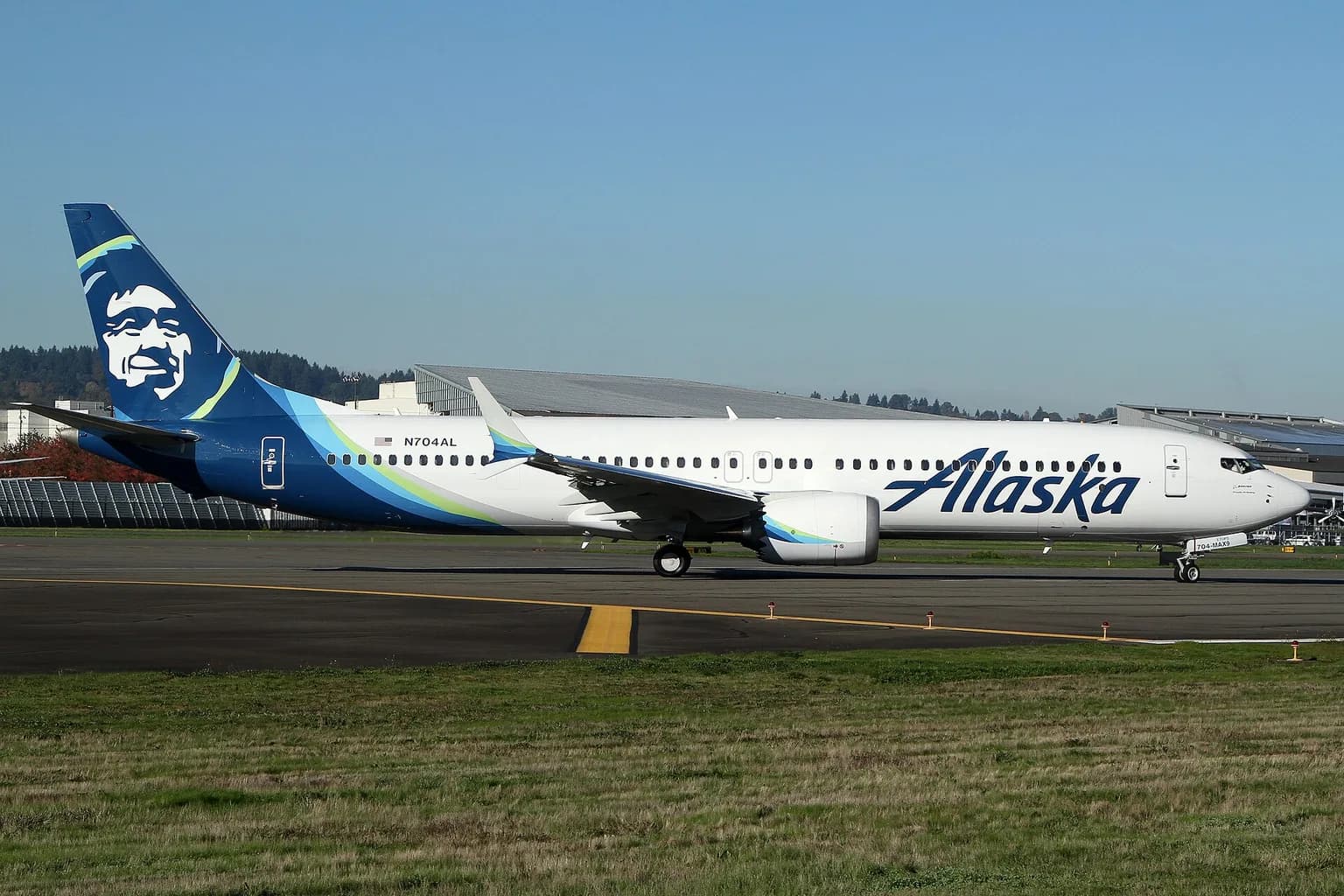
Minutes after Alaska Airlines Flight 1282 left Portland, Oregon, for Ontario, California, on 5 January 2024, a door plug tore from the left side of the two-month-old Boeing 737 MAX 9. The aircraft was carrying 171 passengers and 6 crew members.
The loss of the panel left a gaping hole in the aircraft. Rapid decompression as the plane passed through 15,000 feet forced open the cockpit door, causing the first officer to lose her headset and sending a laminated quick-reference checklist out of the aircraft.
The plane returned safely to Portland. Three people suffered minor physical injuries, and no one was seriously injured, in part because the aircraft was below cruising altitude and some seats were unoccupied.
The cockpit voice recorder held no data from the flight because the recording had been overwritten.
Advertisement
Before the blowout, Alaska Airlines pilots had reported auto pressurisation fail lights on three flights of the aircraft, on 7 December, 3 January and 4 January. The airline then restricted the jet from long flights over water to Hawaii so it could return quickly to an airport if needed.
Federal investigators found that four bolts intended to secure the door plug were missing. Engineers had taken out the bolts during work on rivets at Boeing’s Renton, Washington facility, investigators found, and a photograph documenting the repair work showed they were not replaced afterwards.
A homeowner recovered the missing door plug from a backyard on Sunday evening. Two mobile phones were also found, one beside a road and the other in a yard.
The Federal Aviation Administration ordered the temporary grounding on Saturday of 171 Boeing MAX 9 jets fitted with the same panel. Alaska Airlines then cancelled 170 flights on Sunday and a further 60 on Monday.
Passengers later sued Boeing, Alaska Airlines and Spirit AeroSystems under Pennsylvania law. Their claims include breach of contract, false imprisonment, false light invasion of privacy, assault, negligent infliction of emotional distress and intentional infliction of emotional distress.
The King County Superior Court in Washington denied the companies’ efforts to dismiss the passengers’ “outrage” claim. The ruling permits the punitive damages claim to continue, and where Boeing made key corporate decisions before the blowout could determine whether it faces additional financial penalties.
Boeing has paid Alaska Airlines $160 million in compensation and a $3.1 million FAA fine for safety violations that included problems tied to the blowout.
The incident followed two fatal 737 MAX crashes in 2018 and 2019 that killed 346 people. All MAX planes were grounded for 20 months after those crashes.
Advertisement

Comments (0)