
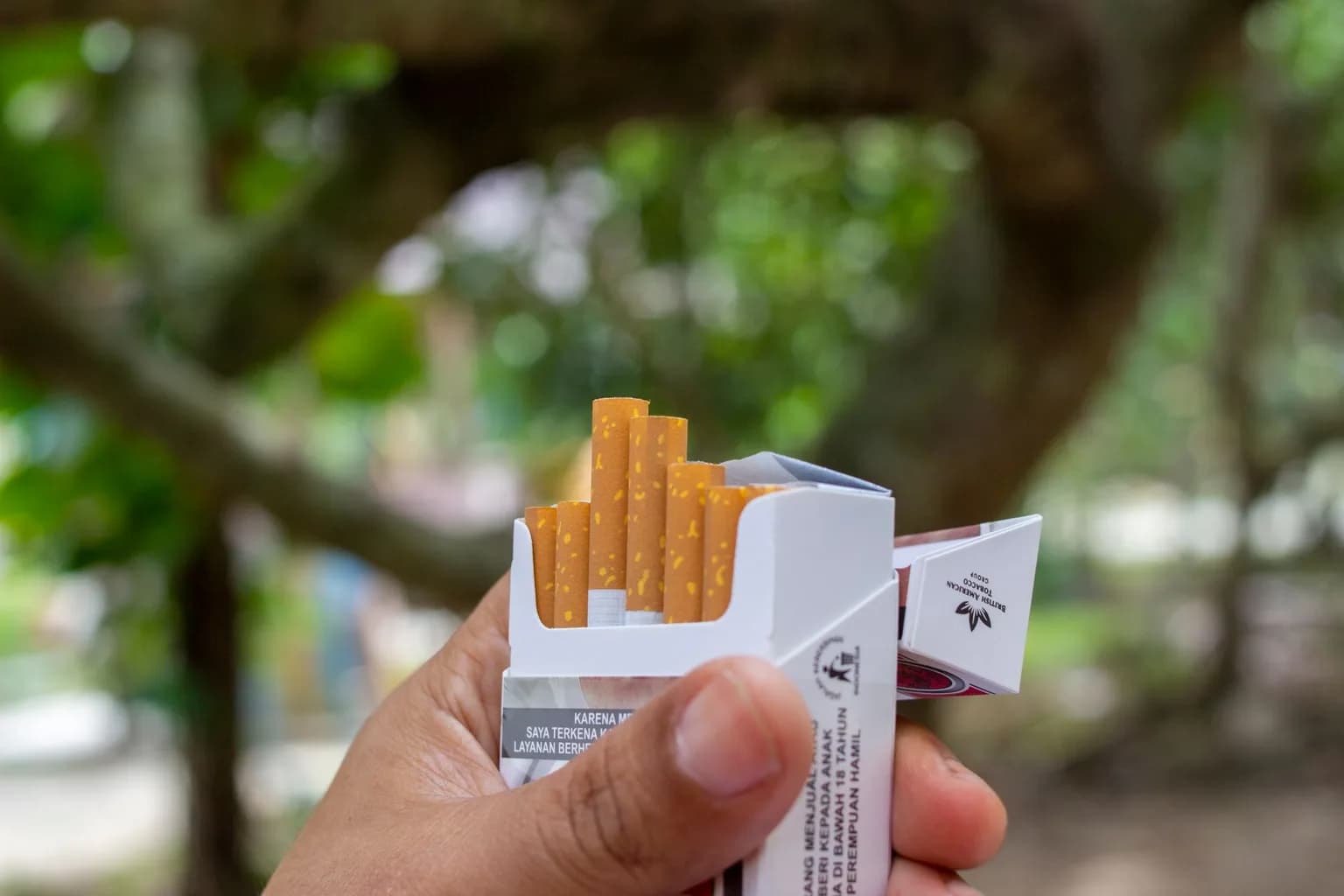
Michael, a 52-year-old smoker in Australia, said he began smoking at 16, when cigarettes cost around $10. He smokes up to 20 cigarettes a day, a habit he said costs about $50 a day at a legitimate retailer, and turned to blackmarket cigarettes in 2024. “Definitely 90, 95 per cent of people, all buy the black market cigarettes, and for the same reason – price,” he said.
Legal cigarettes in Australia now cost close to A$60 a pack. Tobacco excise taxes rose progressively through a cumulative 60% increase over four years beginning December 2013, pushing legal pack prices to around A$60. Australia has some of the world’s highest tobacco taxes, according to the United Nations.
As prices rose, a parallel tobacco black market took hold. National wastewater data showed nicotine consumption increased by 4 per cent in 2024, even as the legal smoking rate had fallen to 8.3% in 2023.
Criminal syndicates have responded by running industrial-scale counterfeit cigarette production in Cambodia and other South-East Asian countries. The facilities are owned, financed or controlled by organized crime groups. Recent intelligence indicates that the groups have begun copying Australian plain packaging and health warnings.
Advertisement
Offshore law-enforcement operations have found products intended for Australia in the standard green packaging, with apparently authentic health warnings. The similarity means members of the public and Australian law-enforcement officers may have limited ability to tell illicit cigarettes from genuine ones on appearance alone.
Julian Hill, the deputy customs minister, said criminal groups had “transformed into a weapon” the global excess supply of cheap tobacco. He said: “They will continue to adapt their tactics and the most recent information indicates that they are now also counterfeiting Australian plain packaging”. Hill said authorities needed urgent new powers to pursue retailers and the supply networks behind them.
The Australian government is seeking Coalition and independent support for rapid approval of amendments to the Customs Act. The reform has passed the House and awaits passage in the Senate. It would create new offences and allow authorities to rely on objective indicators, including unusually low prices, suspicious packaging and products concealed in stores, to prove tobacco entered the country illegally.
Australia’s Combatting Illicit Tobacco Act 2026 received royal assent on 26 August, expanding penalties and investigative powers against organized tobacco crime. South Australia then introduced legislation on 13 October that would permit prison sentences of up to 17 years and fines of A$21 million ($14 million) for illicit tobacco sales. The proposed changes would also allow authorities to close offending retail shops for 130 days. South Australia already has an A$16 million Illicit Tobacco Taskforce.
Michael Brown, South Australia’s Consumer and Business Affairs Minister, said: “For the first time, people caught selling illicit tobacco will face long stints in prison for their involvement in this illegal trade”. He added: “Our message is absolutely clear. Illicit tobacco is not welcome in South Australia.”
On 6 and 7 October, New South Wales authorities seized approximately 420,000 illegal cigarettes, 60 kilograms of loose tobacco and thousands of illicit vaping products during inspections. Police closed 10 tobacco retailers across the state, including eight in southwestern Sydney.
Australia is working with South-East Asian countries to interrupt the trade before products reach Australian territory. Cambodian authorities destroyed approximately 1,200 tonnes of counterfeit cigarettes this year and seized materials used to make them.
Advertisement



Comments (0)