
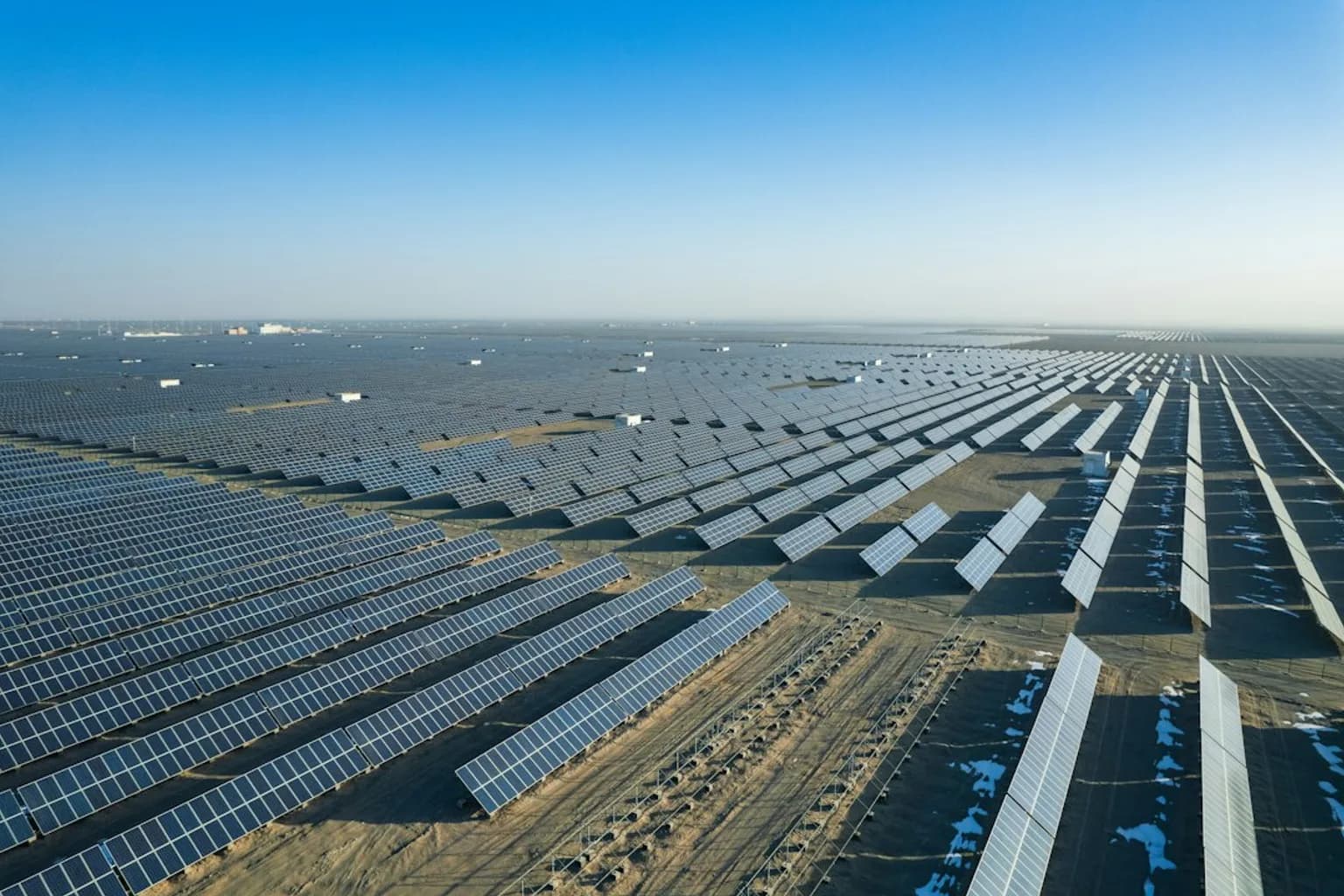
China’s Ministry of Commerce and Ministry of Science and Technology issued a proposal on 16 October 2026 that would add export controls on 12 solar photovoltaic technologies, from polysilicon production to silicon wafer and solar-cell manufacturing. The measure was set out in Announcement No. 48, which proposes revisions to the Catalogue of Technologies Prohibited or Restricted from Export.
Exporters of technologies listed in the announcement now have to register before proceeding with an export. That temporary requirement took effect immediately on 16 October 2026, including for exports that had already begun and remain unfinished.
Companies must make those registrations through the Technology Trade Management Information System on the Ministry of Commerce’s Unified Business Platform.
The proposed solar measures reach beyond production methods themselves. They would also cover key and core equipment that incorporates the relevant technologies.
Advertisement
The 12 photovoltaic technologies span processes and core equipment for polysilicon, silicon wafers, perovskite solar cells, and perovskite-silicon tandem cells and modules.
Among the technologies proposed for export prohibition are cold hydrogenation fluidized-bed technology used in trichlorosilane production lines with annual capacity of at least 250,000 metric tons, and technology for making silicon wafers with a thickness of 70 µm or less.
The proposal also includes tandem cells with efficiencies of at least 30%, large-area single-junction perovskite modules of at least 1 m² with efficiencies of at least 18%, and large-area tandem modules with efficiencies of at least 28%.
The solar proposal is part of a wider consultation covering 40 technologies in artificial intelligence, biomedicine and photovoltaics. The artificial-intelligence additions cover 23 technologies related to large AI models, AI agents, computing clusters and information processing.
Members of the public can comment from 16 October to 15 November 2026 on the proposed technologies, technical thresholds, control measures and facilitation arrangements.
China said the solar controls are intended to protect national security, support the sharing of green technologies and strengthen oversight of technology exports.
The registration system remains in force while the proposed catalogue additions undergo consultation. China had sought revisions to the catalogue in 2023, saying it wanted stronger management of technology imports and exports.
Advertisement




Comments (0)