
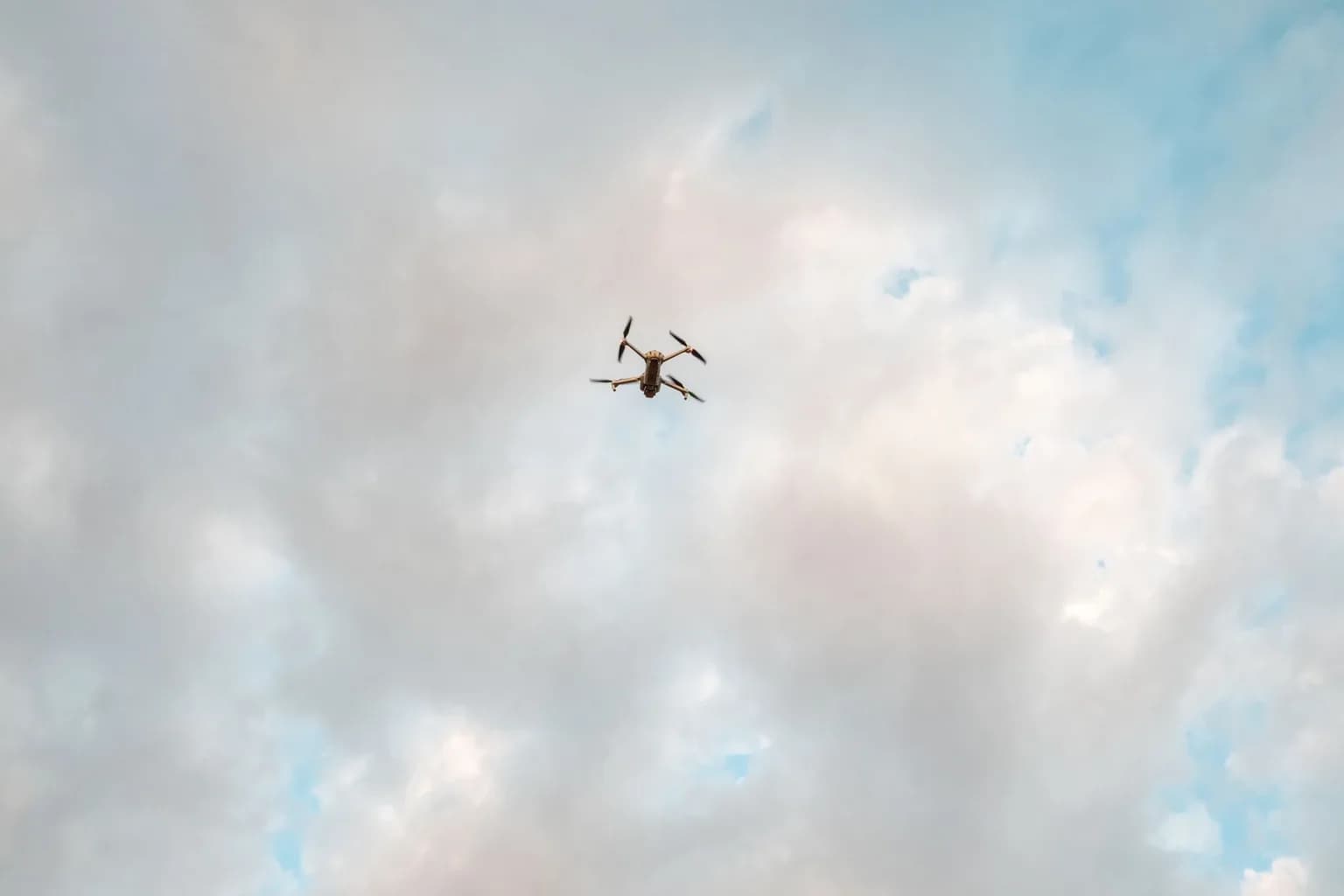
Last year, Flint, commander of the 475th Separate Assault Regiment, known as Code 9.2, asked SkyFall’s founder for a safer way to bring wounded soldiers out of hard-to-reach frontline positions.
SkyFall developed the result over the following year: StarGate, a heavy-lift hexacopter with an enclosed cabin and a fixed medical-grade stretcher for a wounded soldier in full body armour. The company has presented it as Ukraine’s first aerial drone designed for battlefield casualty evacuation.
The need arises in areas where the so-called kill zone extends 10 to 15 kilometers. These are areas under constant fire control from enemy sabotage and reconnaissance groups, artillery and drones.
KVN, a Code 9.2 commander, said ground robots usually need two to three hours to reach a position. “Covering 10 kilometers in minutes would be a drastic change on the front line.”
Advertisement
StarGate can carry up to 150 kg, intended to accommodate a fully equipped soldier and their gear. It has a cruising speed of 65 km/h, a maximum speed of up to 105 km/h and a one-way range of 15 km.
The aircraft uses Starlink and SkyFall’s L-Link system as redundant communications channels. Thermal imaging cameras are intended for nighttime missions, while the drone can fly in rain and snow.
SkyFall has also built defences into the design for a flight path threatened by jamming and first-person-view, or FPV, drones. The company says StarGate can remain airborne after losing one propeller arm and carries a net launcher designed to intercept hostile FPV drones.
On October 14, the Associated Press watched StarGate at a test site in Ukraine. The drone flew through active jamming and launched a net that knocked an attacking FPV drone off course.
During the demonstrations, it completed tests under electronic warfare conditions and simulated attacks by enemy FPV drones. It was also filmed taking off, flying and landing with a passenger on board.
SkyFall says the aircraft continued flying after it lost one of its arms during testing. Preparing a StarGate for flight takes about 10 minutes.
This week, the first StarGate was handed to a combat brigade for evaluation in frontline conditions. Code 9.2 has begun a month-long trial in real combat conditions, intended to assess the drone’s operational effectiveness and its possible role in evacuating casualties from the front line.
A StarGate system will cost from $50,000, depending on its configuration. SkyFall plans to raise production to as many as 1,000 units per month by the end of 2026.
Advertisement




Comments (0)