
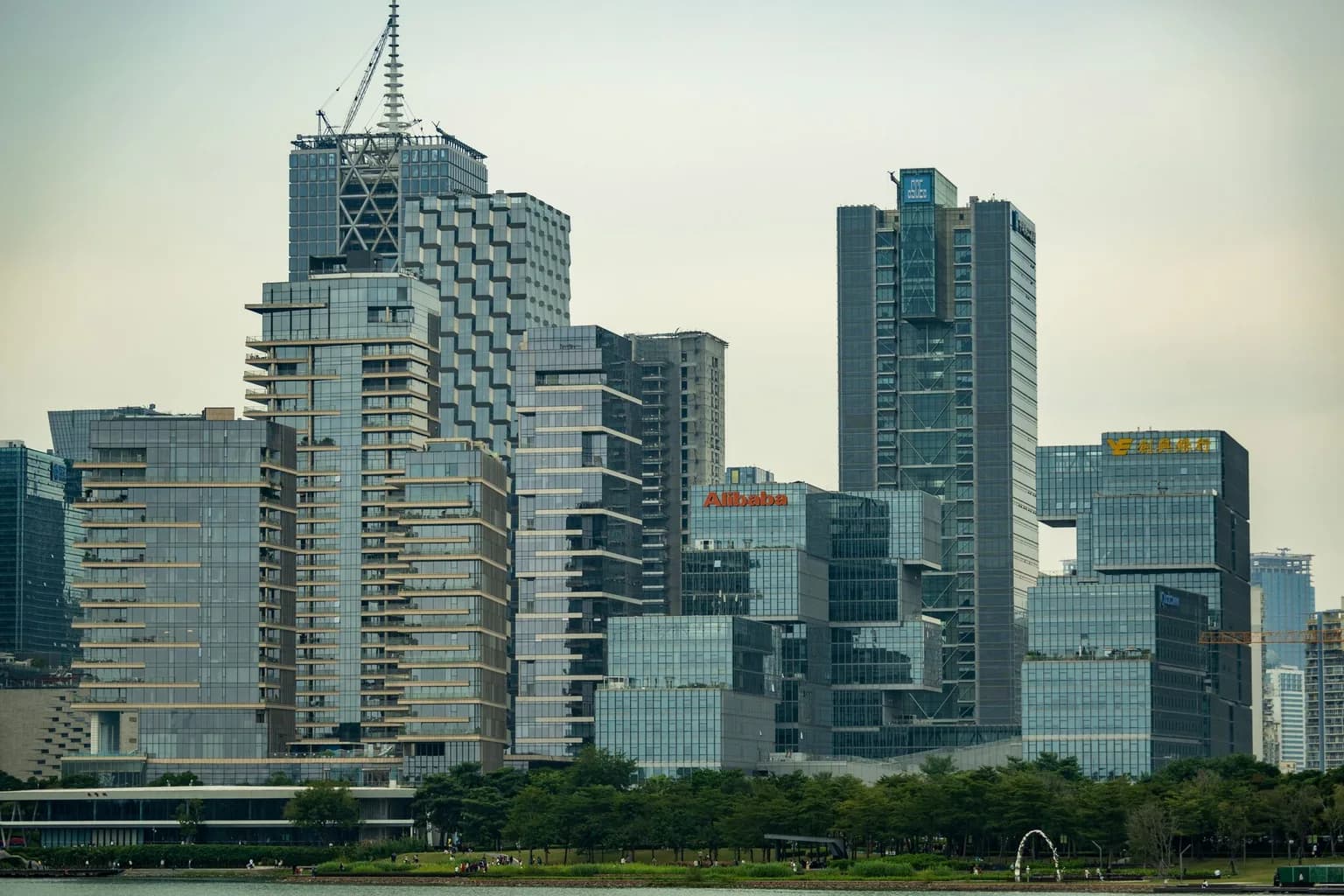
“Most of the work people do, OpenClaw can completely replace,” an unnamed 26-year-old outsourced employee at a large internet company in Hangzhou told Reuters after the company began quietly reducing outsourced staff in March.
That is the blunt version of a transition CBRE expects to reach the office market more gradually. The commercial property services firm said on Thursday, 15 Oct 2026, that artificial intelligence adoption could cut five percentage points from growth in Asia-Pacific office-space demand over the next few years.
The effect would be greatest in developed markets, where 3.9 per cent of office jobs are vulnerable to AI-driven displacement, CBRE said. The group includes Hong Kong, Singapore, Japan, South Korea, Taiwan, Australia and New Zealand. In developing markets, including mainland China, India, Indonesia, Malaysia, Philippines, Thailand and Vietnam, the comparable share is 1.7 per cent.
CBRE’s moderate-displacement model puts occupied office-space growth at 13 per cent by 2030, five percentage points below its base case. Ada Choi, CBRE’s head of Asia-Pacific research, called that outcome “a downside sensitivity analysis”, rather than a forecast of contraction.
Advertisement
The distinction matters. The model does not include any lift from new AI companies, occupations or business creation, Choi said. It instead maps three possible paths: a slow one for Japan, where organisational and cultural resistance could stretch workforce adjustment into the 2040s; a moderate case for developed markets; and a rapid case for mainland China.
The regional divide reflects the make-up of the workforce as much as the technology itself. Office workers account for more than 35 per cent of employment in Singapore, Hong Kong and Australia, compared with less than 10 per cent in India and Vietnam.
Choi said Hong Kong’s office market had problems beyond AI. “AI is unlikely to be the primary driver of office market weakness in Hong Kong. Rather it is likely to accelerate the divergence between prime and secondary assets that is already evident.”
There is little consensus among corporate tenants about whether AI will shrink their premises. Nearly 20% of companies surveyed by CBRE said wider AI adoption would reduce their real-estate needs, while 25 percent expected to expand their office footprint and 56 percent held a neutral view.
The survey covered 651 corporate real-estate executives between May 26 and July 10 in nine regional markets, including Hong Kong, mainland China, Singapore, Japan, Australia and India. It found that 46 percent of occupiers now regard themselves as active AI adopters in corporate real-estate functions, up from 9 percent in 2024.
The old argument over whether employees would return to the office appears to have settled into a less dramatic phase. Eighty-five percent of respondents said desk attendance had reached a permanent equilibrium. Fifty percent expected to enlarge their property portfolios through 2029, and 60 percent of those cited organic corporate growth as the main reason.
Tom Gaffney, CBRE’s head of leasing for Asia-Pacific, said stable attendance and utilisation had allowed companies to move the workplace debate towards improving employee experience and efficiency.
The concern reaches beyond vacancy rates and floorplans. At DBS Bank’s Asia Future Outlook conference, Singapore Prime Minister Lawrence Wong said the government was extremely concerned that AI could remove the junior roles through which young workers learn their trade.
A Singapore university graduate employment survey found that the share of graduates securing work within six months fell from approximately 93% in 2023 to 89% in 2025.
Singapore has the highest proportion of workers affected by AI in Southeast Asia, at 42.2%, while more than 35 percent of its employment is concentrated in office-based roles. Across ASEAN, approximately 22.9 percent of employed people, or 80 million people, do work affected to varying degrees by generative AI, and 3.3 percent, or 11.7 million, face the highest level of automation pressure.
For graduates, the pressure is already tangible. Bloomberg reported on October 8, 2026, that Jagat Pap, a 22-year-old engineering graduate in India, had found herself submitting resumes each day and competing with thousands of job seekers for junior roles after graduating. India has a far smaller office-work share than Singapore, yet the contest for a first foothold can be fierce all the same.
Advertisement





Comments (0)