
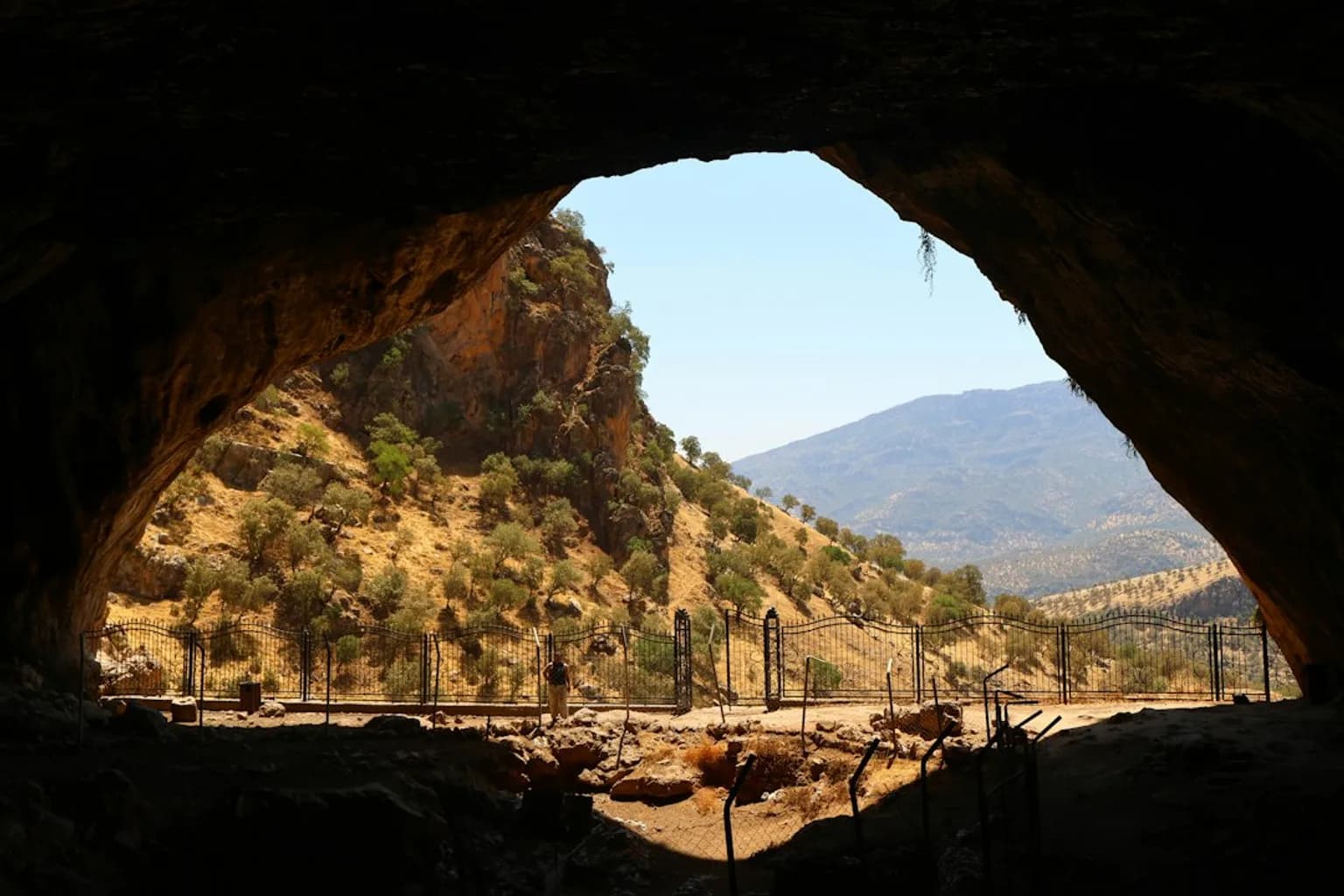
Shanidar A had already survived a terrible blow to the face before a spear entered the Neanderthal’s chest. The injury had shattered a front tooth, split an incisor in half and forced nearby teeth inward. Shanidar A lived for about a year after that trauma, a survival that Emma Pomeroy of the University of Cambridge said would have required long-term care from peers.
Then, about 75,000 years ago in Shanidar Cave in northern Iraq, a sharpened wooden spear was driven into Shanidar A from the front. It travelled through a lung on a slightly upward path and left a round hole in the left shoulder blade, or scapula. The wound probably also pierced the heart.
Shanidar A died at about 45, an age described as a long life by Neanderthal standards.
Pomeroy said the direction of the wound, and the force needed to drive the weapon through the body, had the features of an intended strike aimed at the heart. Researchers have yet to decide whether it was a homicide or a hunting accident.
Advertisement
The partially complete skeleton was recovered from the cave in 2019 and 2022. It includes a largely complete right hand, two left ribs, a fragment of a right rib, the left scapula and six teeth. The scapula had been buried beneath 25 feet of rock.
Pomeroy and her colleagues reported the findings in Nature on Thursday. They said Shanidar A’s remains combine signs of care during life with evidence of a violently inflicted death.
The wooden weapon is significant because the damage differs from that expected from a stone tool. The researchers said it was consistent with sharpened wooden spear tips unearthed in the United Kingdom. Pomeroy said Neanderthals could throw wooden spears as effectively as modern humans, while examples from Germany appear to have been balanced carefully and designed for throwing.
Shanidar A is one of at least five Neanderthal individuals found at Shanidar Cave since excavations began there in the 1950s. Another, a male known as Shanidar 3, died in his 40s after a fatal rib injury around 50,000 years ago. He had a degenerative foot disorder that would have made walking painful, and researchers say both he and Shanidar A survived injuries and illnesses that strongly suggest care from their peers.
Shanidar 3 was once theorised to have been killed by a Homo sapiens who threw a stone-tipped spear. The two Neanderthals were buried in the same cave around 25,000 years apart, and researchers conclude that both died violently at the hands of their peers. Yet the presence of both Homo sapiens and Neanderthals in the region at both 75,000 and 50,000 years ago leaves the identity of any attacker unresolved.
The cases offer evidence of lethal harm among early populations, though they do not settle whether such violence was common or exceptional. Shanidar A’s life and death instead leave two records in the same bones: severe injury survived through sustained care, followed by a fatal wound whose circumstances remain uncertain.
Advertisement





Comments (0)