
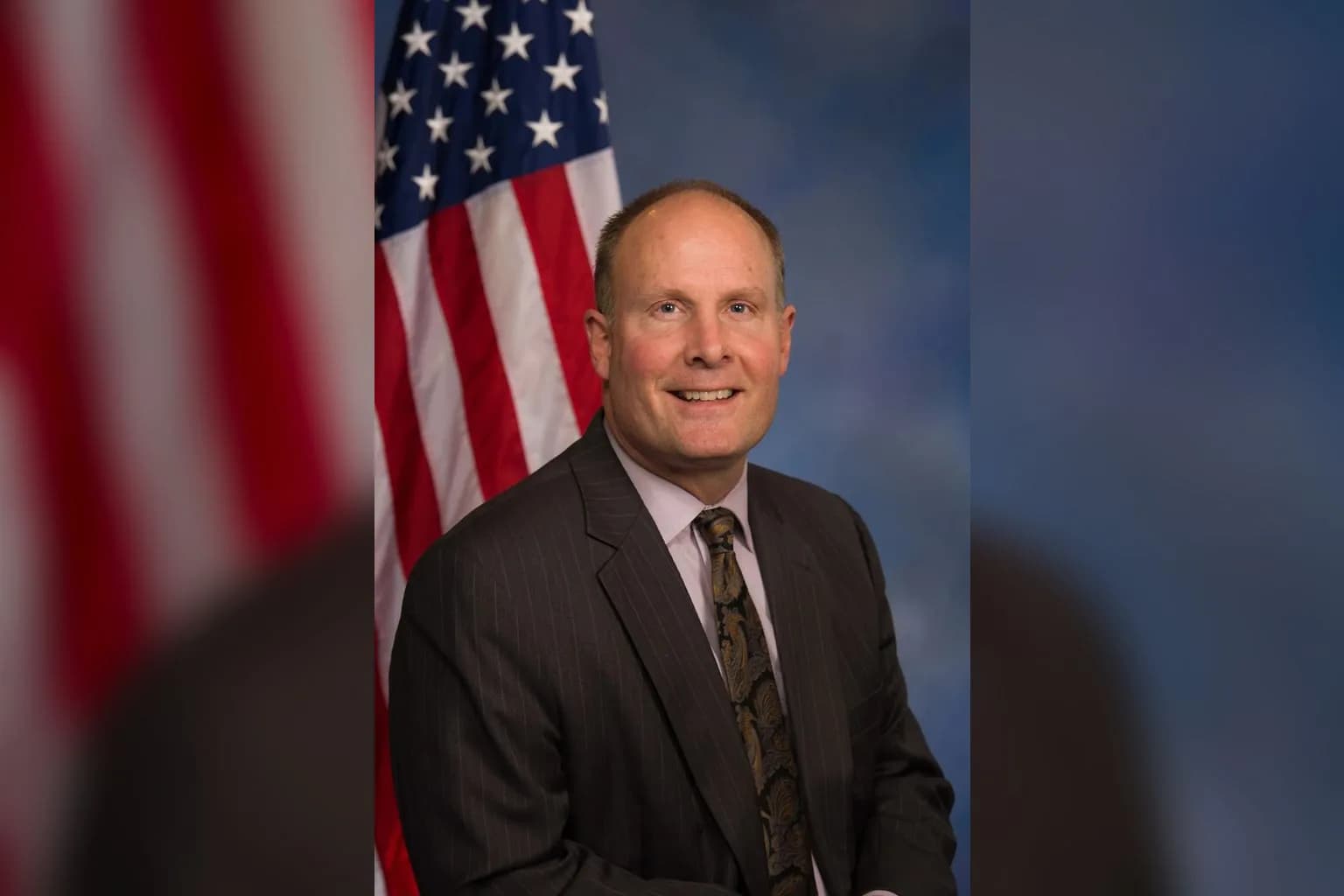
Representative John Moolenaar, chairman of the House Select Committee on China, has asked the Pentagon to blacklist 58 Chinese universities and 62 technology labs, a step that could bar US researchers from using Pentagon funding to work with the designated institutions. Moolenaar sent the letter to US Secretary of Defence Pete Hegseth on 1 October, and it became public in the week of 14 October 2026.
The request would roughly double the Pentagon’s Section 1286 restricted-party list in a single move. Moolenaar also urged the addition of 14 Chinese Academy of Sciences Institutes, 22 foreign malign talent programmes, the China Scholarship Council and affiliated scholars.
Tsinghua University in Beijing is among the institutions named in the request. Its business school advisory board includes chief executives from Nvidia, Apple and AMD.
The institutions singled out work in areas including artificial intelligence, semiconductors and quantum computing. The select committee said it had found Chinese research bodies with documented affiliations and other substantial links, including formal agreements and oversight relationships, to China’s defence research and industrial base.
Advertisement
The proposal arrived as US funding agencies and the Pentagon were already tightening scrutiny of such links. In July 2026, the National Science Foundation said it would stop financing research conducted with organisations named on several federal restricted-party lists. The policy took effect on 1 October.
In August, the Defense Department said it would investigate 30 US schools over potential collaboration with Chinese institutions already on the Section 1286 list. The department is barred from giving research funding to entities that work with Chinese universities on that list.
On 13 October, the House Select Committee on China released a report containing over 700 pages of investigative records on undisclosed Chinese affiliations and research funding at American universities. Moolenaar’s letter was then released publicly on 14 October through an accompanying press release.
Beijing has described the proposed expansion as Cold War-style overreach. Liu Chang, a Chinese embassy spokesperson, said China opposes the use of national-security arguments to politicise or instrumentalise ordinary scientific, educational and academic exchanges.
Liu said scientific innovation and academic development depend on open cooperation, and argued that curbs on normal research exchanges would harm all sides, including US researchers and institutions. He called on the US to abandon what he described as a Cold War mentality and to create an open, fair and non-discriminatory setting for educational, scientific and people-to-people exchanges between China and the United States.
For now, Moolenaar’s letter is a request to the Pentagon. If its recommendations are adopted, US researchers would face new limits on Pentagon-funded work with the institutions it names.
Advertisement



Comments (0)